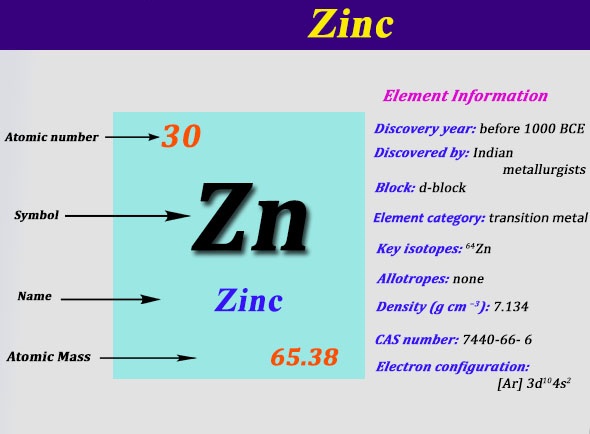
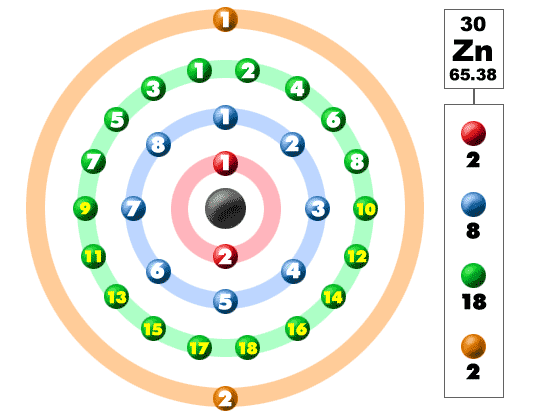
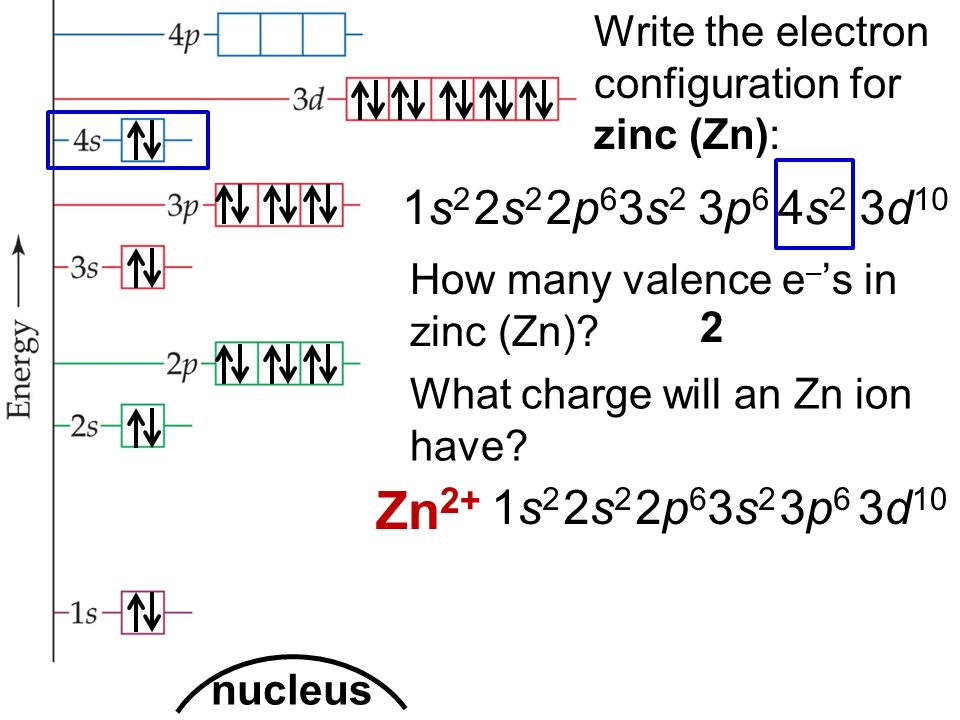
Zinc Valence Electrons are one of the most important concepts students learn while studying the periodic table and chemical bonding. In this guide, you’ll discover how many valence electrons zinc (Zn) has, where they are located in its electron configuration, and why they matter in chemical reactions. We also explain zinc’s atomic number, electron configuration, valency, oxidation state, and related periodic table facts in a simple, student-friendly way. Whether you’re preparing for school exams, competitive exams, or strengthening your chemistry basics, this article will help you understand zinc valence electrons step by step.
- Flerovium Valence Electrons
- Helium Valence Electrons
- Plutonium Valence Electrons
- Lithium Valence Electrons
- Mercury Valence electrons
- Americium Valence Electrons
- Neptunium Valence Electrons
- Oxygen Valence Electrons
- Moscovium Valence Electrons
- Sodium Valence Electrons
- Cesium valence electrons
- Magnesium Valence Electrons
- Bismuth Valence electrons
- Aluminum Valence Electrons
- Silicon Valence Electrons
- Beryllium Valence Electrons
- Livermorium Valence Electrons
- Fluorine Valence Electrons
- Radon Valence electrons
- Carbon Valence Electrons
- Xenon Valence Electrons
- Neon Valence Electrons
- Tennessine Valence Electrons
- Antimony Valence Electrons
- Radium Valence Electrons
- Oganesson Valence Electrons
- Iodine Valence Electrons
- Lead Valence electrons
- Sulfur Valence Electrons
- Tellurium Valence Electrons
- Boron Valence Electrons
- Gold Valence Electrons
- Nobelium Valence Electrons
- Neon Valence Electrons
- Hydrogen Valence Electrons
- Nitrogen Valence Electrons
- Phosphorus Valence Electrons
How many valence electrons does Zinc have?
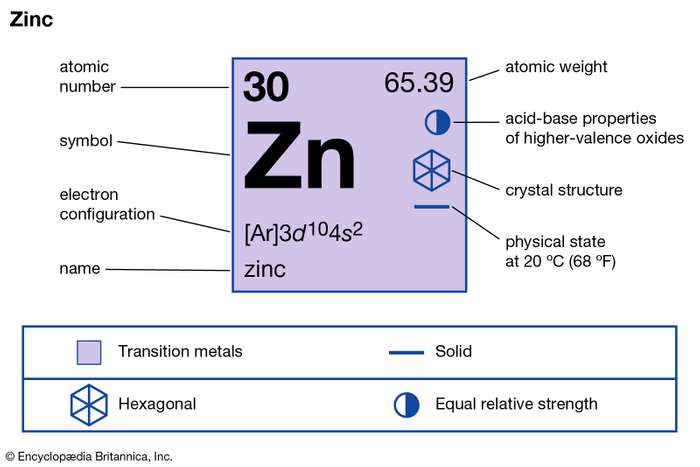
Zinc (Zn) is a silvery-gray metallic element with the atomic number 30. It belongs to the transition metals and is known for its excellent durability, corrosion resistance, and electrical conductivity. Although zinc shares some chemical properties with magnesium, it behaves differently because of its unique electron configuration. Understanding the Zinc Lewis dot structure, valence electrons of zinc, and electron configuration makes it easier to learn how this element forms compounds and participates in chemical reactions.
Zinc is naturally found in the Earth’s crust and is mainly extracted from minerals such as sphalerite (zinc sulfide). Major zinc-producing countries include China, Australia, Peru, India, the United States, and Mexico. Thanks to its versatility, zinc is widely used in construction, automotive manufacturing, electronics, batteries, metal coatings, pharmaceuticals, and agriculture. Its rust-resistant properties make it one of the most valuable industrial metals worldwide.
One of the most important uses of zinc is galvanizing steel and iron to prevent rust and corrosion. It is also an essential ingredient in brass, an alloy made from copper and zinc, while small amounts of zinc are used in some bronze alloys. In addition, zinc is found in die-casting, roofing materials, coins, sunscreen, cosmetics, and dietary supplements. As an essential trace mineral, zinc supports the immune system, wound healing, DNA synthesis, normal growth, and enzyme function. A zinc deficiency may lead to weakened immunity, slow wound healing, hair loss, and impaired growth.
Zinc Valence Electrons Dot Diagram
To understand the Lewis dot diagram of zinc, it is important to identify its valence electrons. Zinc has the electron configuration [Ar] 3d¹⁰ 4s², meaning it has 2 valence electrons in its outermost shell. In the Zinc Lewis dot structure, these two valence electrons are represented by two dots placed around the chemical symbol “Zn.” The Lewis dot diagram helps students visualize zinc’s outer electrons, making it easier to understand its chemical bonding, oxidation state (+2), and role in forming ionic compounds.
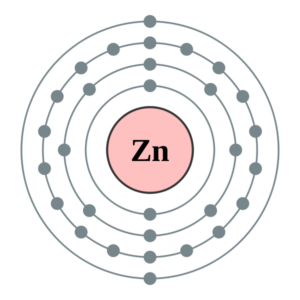
The diagram further helps in understanding the bonding pattern of valence electrons. Single pair of dots represents the single bond, while double pair of dots represents the dual bonding.
Valency of Zinc
The precise and accurate valency of Zinc is +2. Zinc is the metal transition element and hence it belongs to the d block category. The outermost shell of zinc contains 2 electrons hence zinc can lose 2 electrons. So, Zinc gains stability after losing out the 2 electrons.