Nitrogen Valence Electrons: Have you ever wondered what the valency of nitrogen is and why it forms so many different compounds? Valency is the combining capacity of an element, which tells us how many electrons an atom can gain, lose, or share to achieve a stable electronic configuration. Understanding the valency of nitrogen, its electronic configuration, and its position in the periodic table is essential for learning chemistry. In this guide, you’ll discover the correct valency of nitrogen, why it varies in different compounds, and how it behaves during chemical bonding.
- Hydrogen Valency
- Helium Valency
- Beryllium Valency
- Boron Valency
- Fluorine Valency
- sodium Valency
- Aluminum Valency
Nitrogen Valence Electrons Dot Diagram
The Lewis dot diagram (electron dot diagram) for nitrogen shows its 5 valence electrons. Nitrogen has the electronic configuration 1s² 2s² 2p³, so there are 5 electrons in its outermost shell.
Nitrogen belongs to Group 15 (VA) of the periodic table. All Group 15 elements have 5 valence electrons, which is why nitrogen typically forms three covalent bonds in compounds like NH₃ (ammonia).
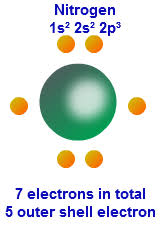
How many valence electrons does Nitrogen have?
Nitrogen (N) has the atomic number 7 and the electronic configuration 2,5, meaning it has 2 electrons in the first shell and 5 electrons in the outermost (valence) shell. Since it needs 3 more electrons to complete its octet, the most common valency of nitrogen is 3. However, nitrogen can also exhibit variable valency and oxidation states depending on the compound it forms. For example, it forms three covalent bonds in ammonia (NH₃), while in compounds such as nitric oxide (NO), nitrogen dioxide (NO₂), and nitric acid (HNO₃), it displays different oxidation states. If you want to learn more about the position of nitrogen in the periodic table, its atomic structure, and related chemical properties, you can also explore the homepage of this website.
What Is The Valency Of Nitrogen In Ammonium
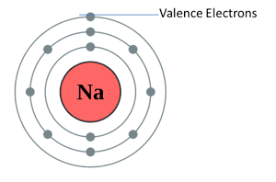
The valency of Nitrogen in Ammonia is 3. The number of electrons shared by nitrogen with hydrogen in ammonia is 3 to complete its octet state. The remaining 2 electrons remain as single electrons and do not pair with other electrons.
Leave a Reply