Welcome to our chemistry learning resource, where you can explore calcium valence electrons and gain a better understanding of the periodic table, atomic structure, and chemical elements. This guide explains the number of valence electrons in calcium, its electron configuration, Lewis dot structure, group and period, atomic number, and how these properties influence its chemical behavior. Whether you’re a student, teacher, or chemistry enthusiast, our easy-to-understand explanations and accurate information make learning about calcium and other elements simple and engaging.
- Flerovium Valence Electrons
- Helium Valence Electrons
- Plutonium Valence Electrons
- Lithium Valence Electrons
- Mercury Valence electrons
- Americium Valence Electrons
- Neptunium Valence Electrons
- Oxygen Valence Electrons
- Moscovium Valence Electrons
- Sodium Valence Electrons
- Cesium valence electrons
- Magnesium Valence Electrons
- Bismuth Valence electrons
- Aluminum Valence Electrons
- Silicon Valence Electrons
- Beryllium Valence Electrons
- Livermorium Valence Electrons
- Fluorine Valence Electrons
- Radon Valence electrons
- Carbon Valence Electrons
- Xenon Valence Electrons
- Neon Valence Electrons
- Tennessine Valence Electrons
- Antimony Valence Electrons
- Radium Valence Electrons
- Oganesson Valence Electrons
- Iodine Valence Electrons
- Lead Valence electrons
- Sulfur Valence Electrons
- Tellurium Valence Electrons
- Boron Valence Electrons
- Gold Valence Electrons
- Nobelium Valence Electrons
- Neon Valence Electrons
- Hydrogen Valence Electrons
- Nitrogen Valence Electrons
- Phosphorus Valence Electrons
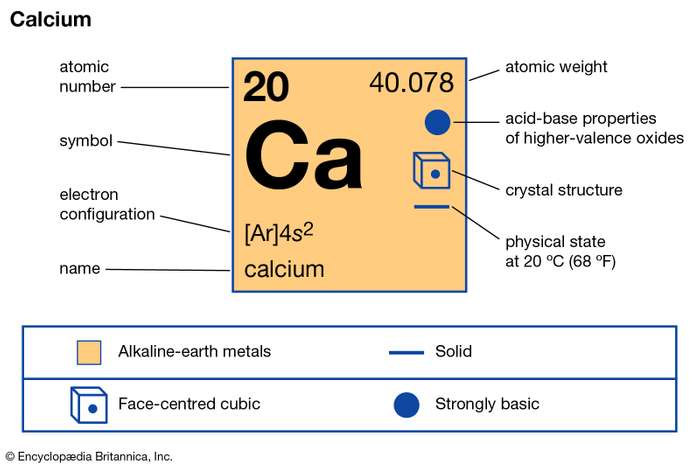
Calcium is a highly reactive chemical element with the atomic number 20 and belongs to the alkaline earth metals group on the periodic table. Because it reacts quickly with oxygen and moisture in the air, pure calcium is rarely found in nature. Freshly cut calcium has a shiny silver-white appearance, but it soon develops a dull gray coating as it oxidizes. Calcium is the fifth most abundant element in the Earth’s crust and is commonly found in rocks, limestone, chalk, marble, and minerals.
Calcium is also an essential mineral for the human body and plays a crucial role in maintaining strong bones and teeth, where nearly 99% of the body’s calcium is stored. In addition to supporting skeletal health, calcium helps regulate muscle movement, nerve function, blood clotting, and heart health. Since the human body cannot produce calcium on its own, it must be obtained through calcium-rich foods such as dairy products, leafy green vegetables, fortified foods, and dietary supplements when needed.
Calcium Valence Electrons Dot Diagram
Explore the Calcium Lewis Dot Diagram to understand how many valence electrons a calcium (Ca) atom has and how they participate in chemical bonding. The Lewis dot structure of calcium shows two valence electrons, represented as two dots around the chemical symbol Ca, making it easier to learn electron arrangement, bonding behavior, and periodic table trends.
The Calcium Lewis Dot Structure is an essential concept in chemistry for understanding valence electrons, electron configuration, ionic bond formation, and chemical reactions. Whether you’re a student preparing for exams or learning basic chemistry, this simple diagram helps explain how calcium loses its two outermost electrons to form a Ca²⁺ ion and bond with other elements. Explore the Calcium dot diagram below for a clear and detailed understanding.
Valency of Calcium
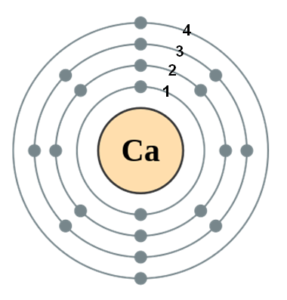
The valency of calcium (Ca) is 2 because its electronic configuration is 2, 8, 8, 2. Calcium has two electrons in its outermost shell (valence shell) and loses these two electrons to form a Ca²⁺ (calcium ion). After losing two electrons, calcium attains the stable electron configuration 2, 8, 8, which is similar to the noble gas argon. Therefore, the valency of calcium is always 2, making it a highly reactive alkaline earth metal.
Understanding the valency of calcium is essential in chemistry because it explains how calcium forms chemical bonds and compounds. According to the octet rule, atoms become more stable when they achieve a complete outer electron shell. Calcium follows this rule by losing two valence electrons, not by gaining them, to achieve a stable octet. This property helps calcium form compounds such as calcium oxide (CaO) and calcium chloride (CaCl₂) and plays an important role in chemical reactions, ionic bonding, and periodic table trends.
How many valence electrons does Calcium have?
Furthermore, are generally two rules to figure out the valency of an element. The first rule is the octet rule while the second rule is the duplet rule. You can apply either of the rules to calculate the valency of calcium. Moreover, you can also refer the periodic table to determine the correct valency of Calcium.
Leave a Reply