Understanding Periodic Table Family Names is one of the easiest ways to master chemistry. The Periodic Table Families group elements with the same number of valence electrons, which is why they share similar chemical properties, reactivity, and bonding behavior. From the Alkali Metals and Alkaline Earth Metals to the Halogens, Noble Gases, and Transition Metals, each family has unique characteristics that make learning the periodic table much simpler. In this guide, you’ll explore Periodic Table Family Names with groups, properties, examples, and easy-to-understand explanations, making it perfect for students, teachers, and anyone preparing for chemistry exams.
- Hydrogen Valence Electrons
- Helium Valence Electrons
- Lithium Valence Electrons
- Beryllium Valence Electrons
- Boron Valence Electrons
- Carbon Valence Electrons
- Nitrogen Valence Electrons
- Oxygen Valence Electrons
- Fluorine Valence Electrons
- Neon Valence Electrons
- Sodium Valence Electrons
- Magnesium Valence Electrons
- Aluminum Valence Electrons
- Silicon Valence Electrons
- Phosphorus Valence Electrons
- Sulfur Valence Electrons
- Chlorine Valence Electrons
- Argon Valence Electrons
- Potassium Valence Electrons
- Calcium Valence Electrons
- Scandium Valence Electrons
- Titanium Valence Electrons
- Vanadium Valence Electrons
- Chromium Valence Electrons
- Manganese Valence Electrons
- Iron Valence Electrons
- Cobalt Valence Electrons
- Nickel Valence Electrons
- Copper Valence Electrons
- Zinc Valence Electrons
- Gallium Valence Electrons
- Germanium Valence Electrons
- Arsenic Valence Electrons
- Selenium Valence Electrons
- Bromine Valence Electrons
- Krypton Valence Electrons
- Rubidium Valence Electrons
- Strontium Valence Electrons
- YttriumValence Electrons
- Zirconium Valence Electrons
- Niobium Valence Electrons
- Molybdenum Valence Electrons
- Technetium Valence Electrons
- Ruthenium Valence Electrons
- Rhodium Valence Electrons
- Palladium Valence Electrons
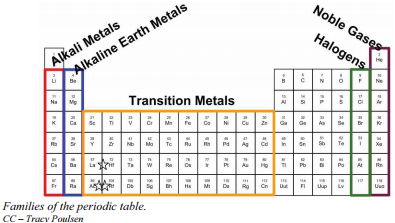
For example, the first group belongs to the lithium family and belong to the alkali metal category.
Periodic Table With Groups And Families
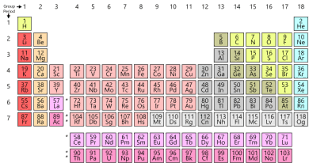
Groups in the Periodic Table are the vertical columns of the periodic table. Elements within the same group have the same number of valence electrons, which gives them similar chemical and physical properties. Because of this, they often react in comparable ways and form compounds with similar characteristics.
Some groups are commonly known as element families, such as the Lithium Family (Group 1 – Alkali Metals), Beryllium Family (Group 2 – Alkaline Earth Metals), and Nickel Family (Transition Metals). Learning about these families makes it easier to understand periodic table groups, element classification, chemical reactivity, electron configuration, and the overall organization of the modern periodic table.
Periodic Table Chemical Families
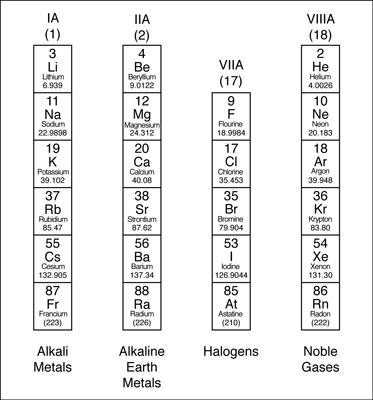
Following are the important categories of chemical families in a periodic table :
- The group 1A is made of alkali metals
- The group IIA is made up of alkaline earth metals
- The group VIIA is made up of halogens
- The VIII A group is made up of noble gases.
What Is A Period In The Periodic Table
A period in a periodic table is the horizontal row across spanning from left to right. It contains elements which have the same number of electronic shells in a period. So the elements belonging to the same period have similar chemical properties.
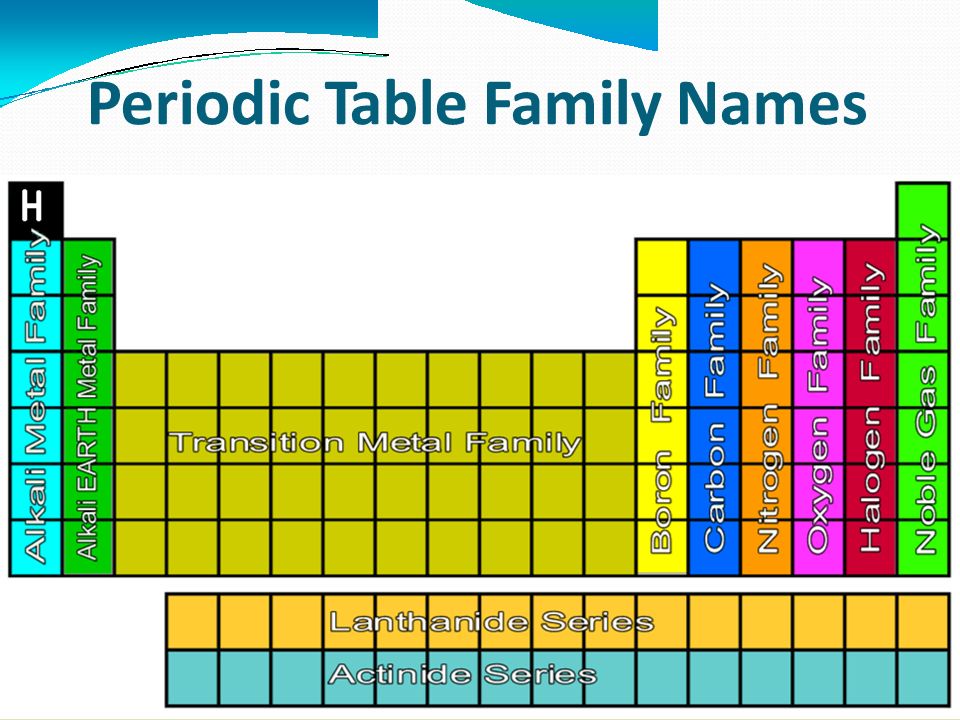
For example, Alkali metals are Group 1 elements in the periodic table and are known for their high chemical reactivity. These elements readily lose one electron to form positive ions, making them highly reactive, especially with water and air. As you move across a period in the periodic table, metallic character gradually decreases, while moving down Group 1, each successive alkali metal becomes more metallic and generally more reactive due to the increasing atomic size and lower ionization energy.