Titanium Electron Configuration: Titanium (symbol: Ti) is a strong, lightweight transition metal with an atomic number of 22. Known for its impressive strength-to-weight ratio, corrosion resistance, and silver-gray appearance, titanium is one of the most valuable metals used in modern industries. It resists rust and corrosion even when exposed to seawater, chlorine, and many harsh chemicals, making it an ideal material for aerospace, medical implants, marine equipment, automotive parts, and industrial applications. If you’re studying Titanium electron configuration, understanding its physical and chemical properties provides a solid foundation for learning how this versatile element behaves.
Titanium was first discovered in 1791 by William Gregor in Cornwall, England. A few years later, German chemist Martin Heinrich Klaproth named the element after the Titans of Greek mythology, reflecting its exceptional strength and durability. Titanium naturally occurs in the Earth’s crust, mainly in the mineral ores rutile and ilmenite, which are the primary commercial sources used for titanium production. It is one of the most abundant transition metals and is widely distributed in rocks, soils, rivers, oceans, and living organisms.
Titanium Electron Configuration
Commercial titanium is extracted from its ores primarily through the Kroll process, while the Hunter process is used less frequently. One of its most important compounds, titanium dioxide (TiO₂), is widely used as a brilliant white pigment in paints, plastics, paper, cosmetics, and sunscreen because of its excellent brightness, durability, and UV-resistant properties. Other valuable compounds include titanium tetrachloride (TiCl₄), used in smoke screens and titanium purification, and titanium trichloride (TiCl₃), which serves as an industrial catalyst in the production of polypropylene and other polymers.
- Potassium Valency
- Calcium Valency
- Technetium Valency
- Titanium Valency
- Vanadium Valency
- Chromium Valency
- Manganese Valency
- iron Valency
- Cobalt Valency
- Nickel Valency
- Copper Valency
- Zinc Valency
- Gallium Valency
- Germanium Valency
- Arsenic Valency
- Selenium Valency
In this guide, you’ll learn everything about the Titanium electron configuration, including its orbital diagram, electronic configuration, valence electrons, electron shell distribution, oxidation states, and the chemical properties that make titanium one of the most important transition metals in chemistry.
What is the Electron Configuration of Titanium
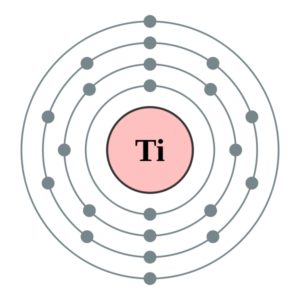
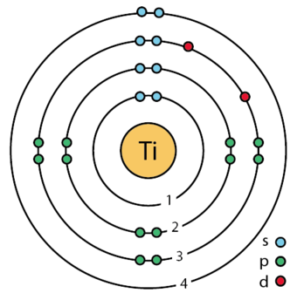
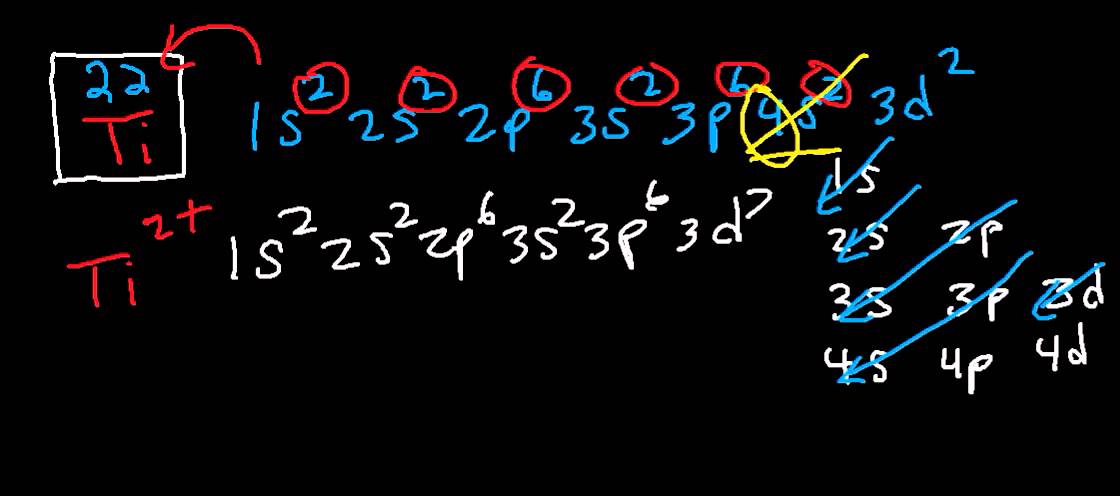
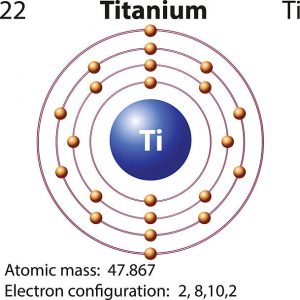
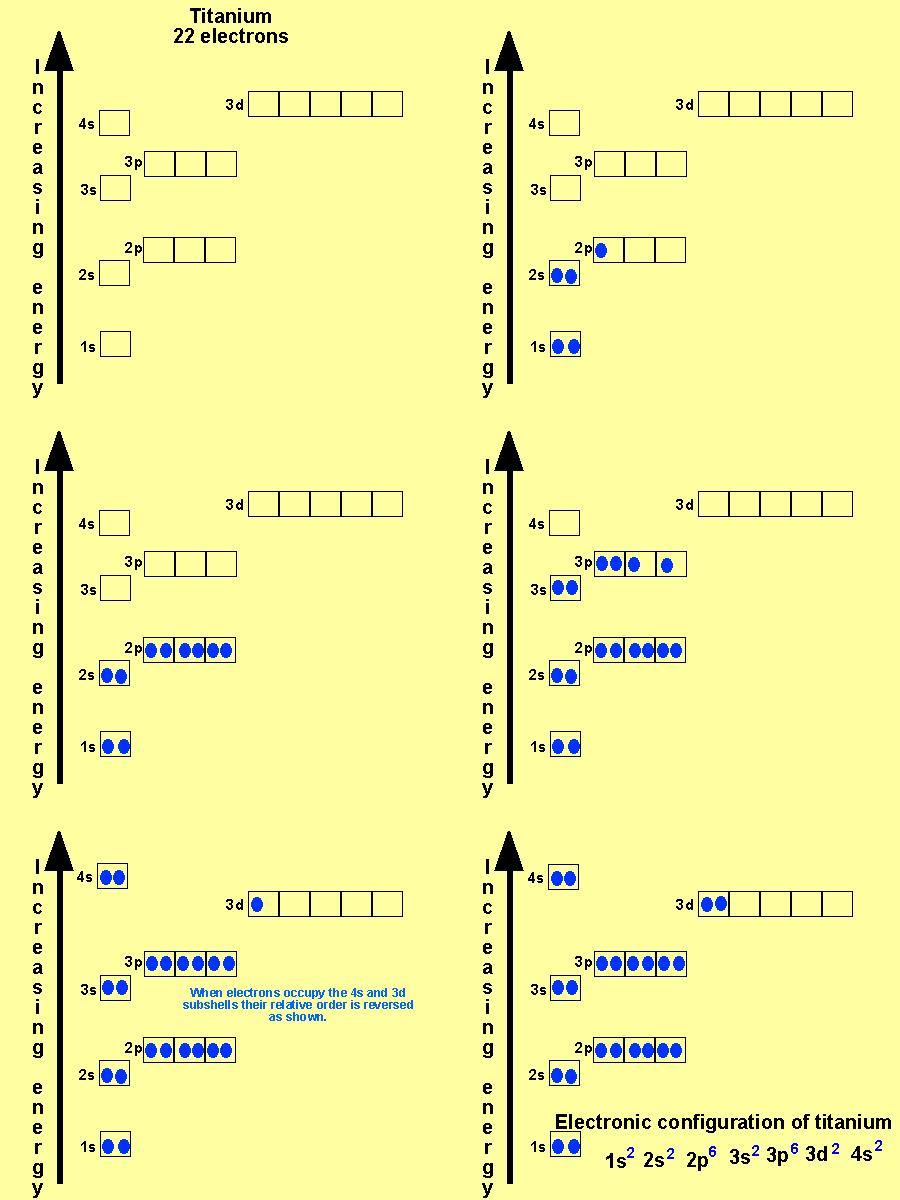
The electron configuration of Titanium (Ti) is [Ar] 3d² 4s². Titanium has an atomic number of 22, which means it contains 22 electrons arranged in specific energy levels and atomic orbitals. In its ground state, the first 18 electrons have the same arrangement as Argon ([Ar]), while the remaining four electrons occupy the 3d and 4s orbitals, giving Titanium the electron configuration [Ar] 3d² 4s².
Understanding the Titanium electron configuration is essential for learning its valence electrons, orbital diagram, electron shell distribution, oxidation states, and chemical properties. This electronic arrangement explains why Titanium is a strong, corrosion-resistant transition metal and why it is widely used in aerospace, medical implants, chemical processing, marine engineering, and industrial manufacturing.
Titanium (Ti) Electron Configuration: [Ar] 3d² 4s²
How Many Valence Electrons Does Titanium Have
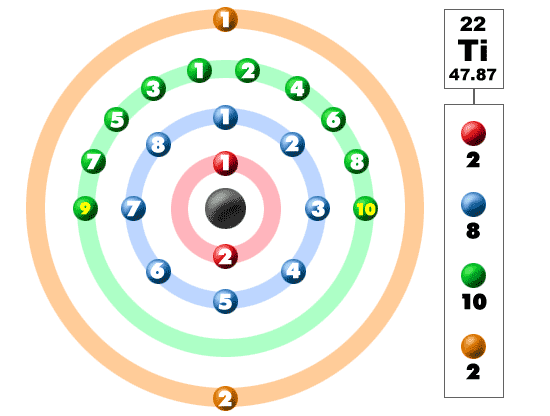
There are 4 Valence electrons in the outer shell of Titanium.
Titanium Number of Valence Electrons
Titanium has 4 valence electrons in its outer shell.
Frequently Asked Questions (FAQs)
Q1. How many valence electrons does Titanium have?
A: Titanium has 4 valence electrons. These electrons are located in the 3d and 4s orbitals, giving Titanium the electron configuration [Ar] 3d² 4s². Its valence electrons are responsible for its chemical bonding and common oxidation states, especially +4 and +3.
Q2. Why is the electron configuration of Titanium written as [Ar] 3d² 4s²?
A: The shorthand notation [Ar] 3d² 4s² uses the noble gas Argon to represent the first 18 electrons. The remaining four electrons are distributed between the 4s and 3d subshells, providing a simplified way to write the complete electron configuration of Titanium.
Q3. Why is Titanium important?
A: Titanium is one of the most valuable transition metals because it is strong, lightweight, and highly resistant to corrosion. It is widely used in aircraft, spacecraft, medical implants, chemical processing equipment, marine engineering, sports equipment, and automotive components. Understanding the Titanium electron configuration helps explain its unique physical and chemical properties.
The electron configuration of Titanium (Ti) is [Ar] 3d² 4s², making it an essential topic for understanding the element’s valence electrons, orbital diagram, oxidation states, and chemical properties. As a strong, lightweight, and corrosion-resistant transition metal, Titanium plays a vital role in industries such as aerospace, medical technology, automotive manufacturing, and chemical engineering. Whether you’re searching for the Titanium electron configuration, Ti electron configuration, atomic number 22, or preparing for chemistry exams like JEE, NEET, or university studies, this guide provides a clear and complete explanation to help you master the concept quickly and confidently.