To write the Chlorine electron configuration (Cl), you first need to know the atomic number of chlorine, which is 17. This means a neutral chlorine atom contains 17 electrons. Following the Aufbau principle, these electrons are placed into atomic orbitals in the correct order of increasing energy levels until all 17 electrons are arranged. Understanding the electron configuration of chlorine is essential for learning about its chemical properties, valence electrons, bonding behavior, and position in the periodic table.
- Chlorine Valence Electrons
- Technetium Valence Electrons
- Titanium Valence Electrons
- Vanadium Valence Electrons
- Chromium Valence Electrons
- Manganese Valence Electrons
- iron Valence Electrons
- Cobalt Valence Electrons
- Nickel Valence Electrons
- Copper Valence Electrons
- Zinc Valence Electrons
- Gallium Valence Electrons
- Germanium Valence Electrons
- Arsenic Valence Electrons
- selenium Valence Electrons
- Argon Valence Electrons
- Potassium Valence Electrons
- Calcium Valence Electrons
Chlorine Electron Configuration
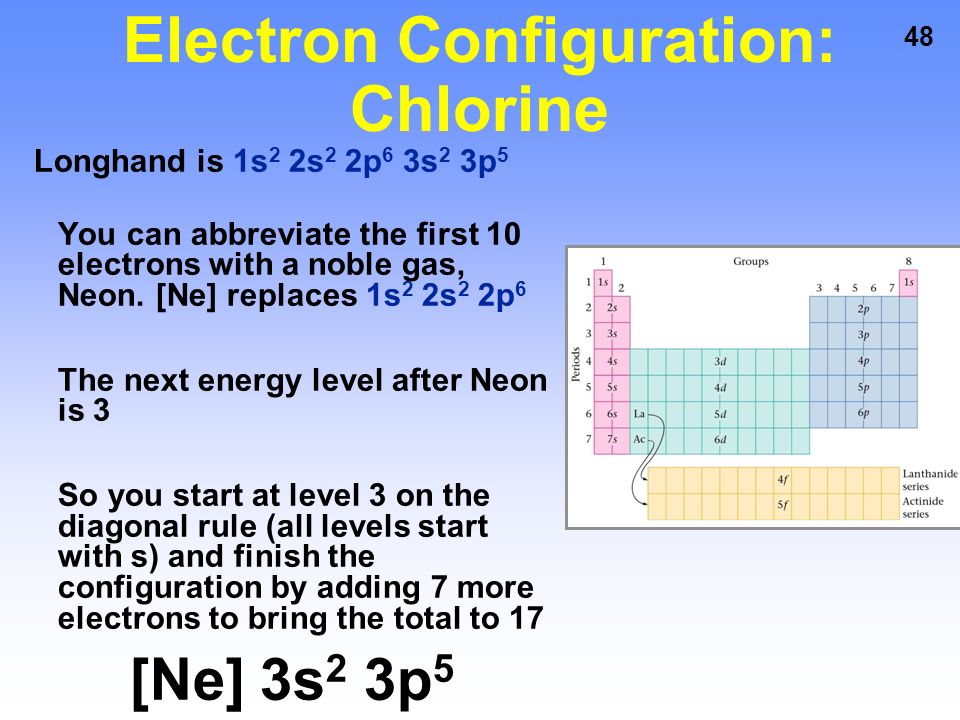
Electron Dot Structure of Chlorine
The Lewis dot structure of chlorine (Cl) shows the 7 valence electrons found in the atom’s outermost shell. Since chlorine belongs to Group 17 (Halogens) of the periodic table, it has seven valence electrons, making it highly reactive and only one electron short of achieving a stable octet. The chlorine Lewis dot diagram is widely used to explain chemical bonding, ionic and covalent compounds, and how chlorine forms stable molecules such as sodium chloride (NaCl). Refer to the image below to see the correct Lewis dot structure for chlorine. You can see the electron dot structure of chlorine in the image below;
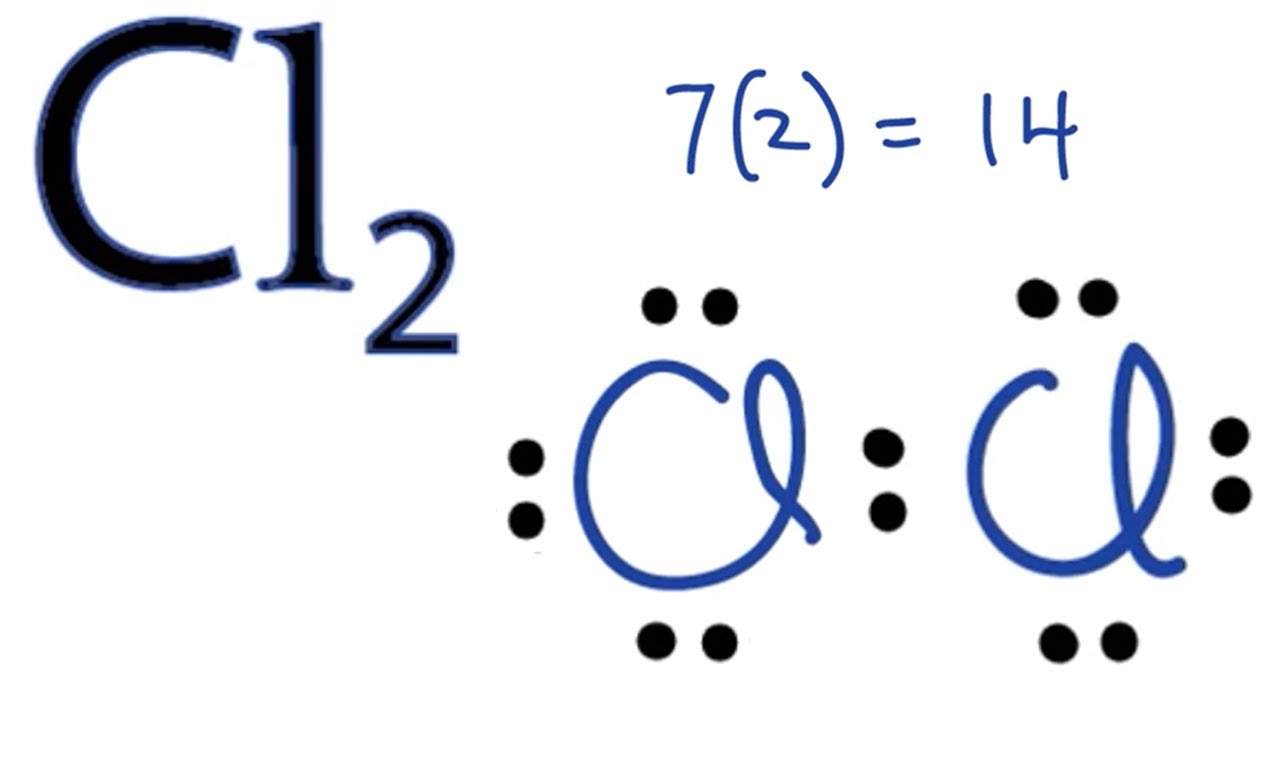
Chlorine Number of Valence Electrons
The atomic number of chlorine is 17. It is the number of protons that are present in the nucleus of an atom. All the atoms of chlorine have the same atomic number. In every atom that is stable, the number of electrons and the number of protons are equal. Similarly, the number of electrons and protons in chlorine atom. This means, that the number of electrons present in the chlorine atom is 17.
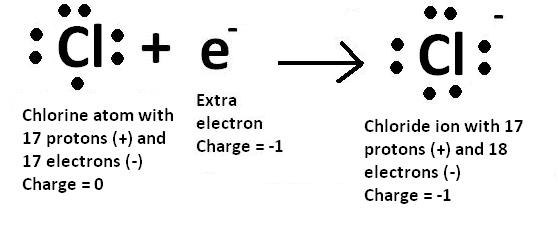
What is Electron For Chlorine
Since the atomic number of the chlorine is 17 so the number of the electron in the chlorine is 17 You can also check out the image below;
Electronic Configuration of Chlorine Ion (Cl⁻)
The electronic configuration of chlorine (Cl) is determined by its 17 electrons, giving it the following ground-state electron configuration:
1s² 2s² 2p⁶ 3s² 3p⁵
When a chlorine atom gains one electron, it forms the chloride ion (Cl⁻). This extra electron completes the outermost shell, allowing chlorine to achieve a stable noble gas configuration similar to Argon (Ar). As a result, the electron configuration of the chloride ion (Cl⁻) becomes:
1s² 2s² 2p⁶ 3s² 3p⁶
This stable electron arrangement explains why chlorine readily forms ionic compounds, such as sodium chloride (NaCl). Understanding the electronic configuration of chlorine and the chloride ion is important for learning about chemical bonding, valence electrons, ion formation, octet rule, and the chemical behavior of halogens.

Frequently Asked Questions (FAQs)
Q1. What is the electron configuration of chlorine (Cl)?
A: The electron configuration of a neutral chlorine atom is 1s² 2s² 2p⁶ 3s² 3p⁵. Since chlorine has an atomic number of 17, it contains 17 electrons arranged in increasing energy levels according to the Aufbau principle.
Q2. What is the electron configuration of the chloride ion (Cl⁻)?
A: When chlorine gains one electron, it forms the chloride ion (Cl⁻). Its electron configuration becomes 1s² 2s² 2p⁶ 3s² 3p⁶, which is the same as the noble gas Argon (Ar). This stable arrangement follows the octet rule.
Q3. How many valence electrons does chlorine have?
A: Chlorine has 7 valence electrons because it belongs to Group 17 (Halogens) of the periodic table. It needs one more electron to complete its outer shell, making it highly reactive and likely to form ionic and covalent bonds.
Q4. Why is the electron configuration of chlorine important?
A: The electron configuration of chlorine helps explain its chemical properties, reactivity, oxidation state, and bonding behavior. It also makes it easier to understand concepts such as Lewis dot structures, chemical bonding, ionic compounds, valence electrons, and the periodic table.
Understanding the chlorine electron configuration is essential for learning how chlorine behaves in chemical reactions and why it is one of the most reactive halogens in the periodic table. A neutral chlorine atom contains 17 electrons, giving it the electron configuration 1s² 2s² 2p⁶ 3s² 3p⁵, while the chloride ion (Cl⁻) gains one additional electron to achieve the stable configuration 1s² 2s² 2p⁶ 3s² 3p⁶. Learning the electronic configuration of chlorine, its Lewis dot structure, and its 7 valence electrons provides a strong foundation for understanding chemical bonding, the octet rule, ionic compounds, and the properties of Group 17 elements.
Leave a Reply