Today we shall take up the topic of Hydrogen Valence Electrons. Valency is an important concept in chemistry and has been used to formulate many theories in chemistry and science in general. It can be found by looking at the group number of an element in a periodic table.
- Flerovium Valence Electrons
- Mercury Valence electrons
- Moscovium Valence Electrons
- Bismuth Valence electrons
- Livermorium Valence Electrons
- Radon Valence electrons
- Tennessine Valence Electrons
- Antimony Valence Electrons
- Oganesson Valence Electrons
- Tellurium Valence Electrons
- Nobelium Valence Electrons
- Xenon Valence Electrons
- Neptunium Valence Electrons
- Cesium valence electrons
- Plutonium Valence Electrons
- Iodine Valence Electrons
- Americium Valence Electrons
- Radium Valence Electrons
- Gold Valence electrons
- Lead Valence electrons
- Helium Valence Electrons
- Lithium Valence Electrons
- Beryllium Valence Electrons
- Boron Valence Electrons
- Carbon Valence Electrons
- Nitrogen Valence Electrons
- Oxygen Valence Electrons
- Fluorine Valence Electrons
- Neon Valence Electrons
- sodium Valence Electrons
- Magnesium Valence Electrons
- Aluminum Valence Electrons
- Silicon Valence Electrons
- Phosphorus Valence Electrons
- Sulfur Valence Electrons
- Chlorine Valence Electrons
- Argon Valence Electrons
- Potassium Valence Electrons
- Calcium Valence Electrons
- Titanium Valence Electrons
- Vanadium Valence Electrons
- Chromium Valence Electrons
- Manganese Valence Electrons
How Do You Find the Valency of Hydrogen
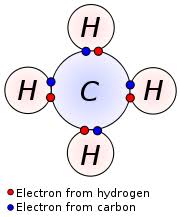
There are two simple methods to determine the valency of hydrogen.
Method 1: Using Electronic Configuration
Hydrogen’s electronic configuration is 1s¹, meaning it has one electron in its outermost shell. To achieve a stable electron arrangement (similar to helium), hydrogen needs one more electron.
Therefore, the valency of hydrogen is 1.
Method 2: Using the Periodic Table
Hydrogen is located in Group 1 of the periodic table. Elements in Group 1 generally possess one valence electron, so hydrogen also has a valency of 1.
Hydrogen Valence Electrons
Since Hydrogen belongs to the first group of elements its electronic configuration is 1. Hence it belongs to the first group of the periodic table. And if the electronic configuration of any element is less than or equal to four, its valency can be determined by the group it belongs to in the periodic table.
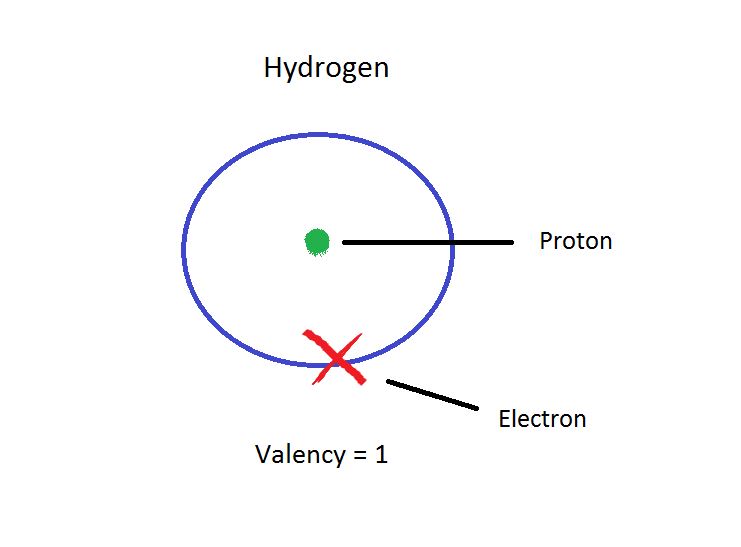
How many Valence electrons does Hydrogen have?
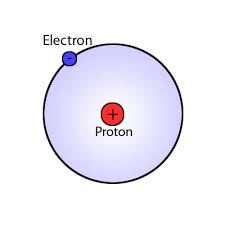
A Hydrogen atom has only one electron in its outermost shell. Hence it requires combining with one more electron of an atom to achieve stability. So its number of valence electrons is 1.
Frequently Asked Questions (FAQs)
Q: How many valence electrons does hydrogen have?
A: Hydrogen has 1 valence electron because it contains only one electron in its outermost shell.
Q: What is the valency of hydrogen?
A: The valency of hydrogen is 1, as it needs one more electron to achieve a stable duplet configuration.
Q: Why does hydrogen have only one valence electron?
A: Hydrogen has an atomic number of 1, meaning it contains only one electron. That electron occupies its outermost shell, making it the valence electron.
Q: Is hydrogen in Group 1?
A: Yes. Hydrogen is placed in Group 1 of the periodic table because it has one valence electron, although its chemical behavior differs from alkali metals.
Q: What is the electronic configuration of hydrogen?
The electronic configuration of hydrogen is 1s¹.
Conclusion
Hydrogen has 1 valence electron because its electronic configuration is 1s¹. This single electron determines its chemical behavior and gives hydrogen a valency of 1. Whether forming water, methane, ammonia, or countless other compounds, hydrogen always tends to make one chemical bond to achieve a stable electron configuration. Understanding Hydrogen valence electrons is fundamental to learning chemical bonding, molecular structures, and the basics of chemistry.