Tin Electron Configuration:The Tin element (Sn) is a soft, silvery-white metal with the atomic number 50 on the periodic table. Its chemical symbol Sn comes from the Latin word stannum. Tin belongs to Group 14 (Carbon Group) and is classified as a post-transition metal. It is primarily extracted from the mineral cassiterite (SnO₂), the world’s most important tin ore. Thanks to its excellent corrosion resistance, low toxicity, and durability, tin is widely used in food cans, solder, electronics, alloys, and industrial manufacturing.
- Sodium Electron Configuration
- Germanium Electron Configuration
- Carbon Electron Configuration
- Nitrogen Electron Configuration
- Oxygen Electron Configuration
- Fluorine Electron Configuration
- Neon Electron Configuration
- Thorium Electron Configuration
- Protactinium Electron Configuration
- Neptunium Electron Configuration
- Plutonium Electron Configuration
- Americium Electron Configuration
- Nobelium Electron Configuration
- Gold Electron Configuration
- Mercury Electron Configuration
Tin Electron Configuration
-
Element Symbol: Sn
-
Atomic Number: 50
-
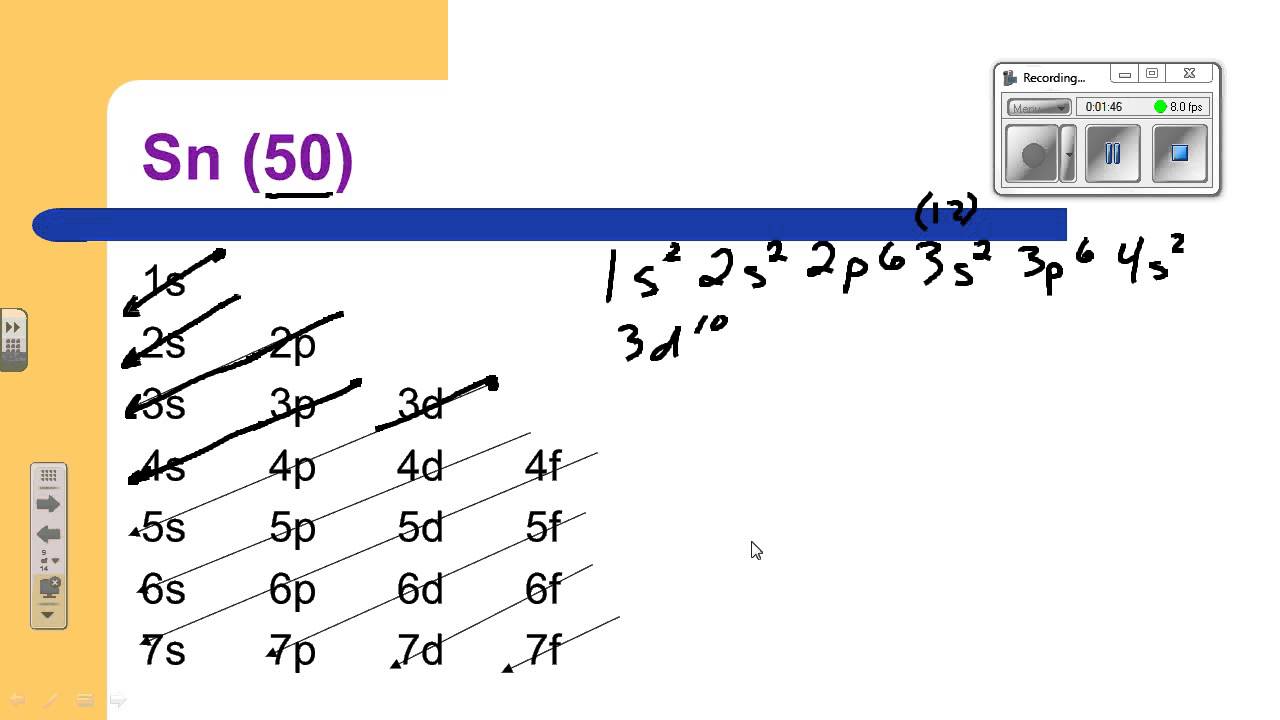
Full Configuration: 1s² 2s² 2p⁶ 3s² 3p⁶ 3d¹⁰ 4s² 4p⁶ 4d¹⁰ 5s² 5p²
-
Shorthand Configuration: [Kr] 4d¹⁰ 5s² 5p²
-
Valence Electrons: 4 (from 5s² 5p²)
-
Group: 14 (IVA), Period: 5
-
Common Oxidation States: +2, +4
The Tin element shares several chemical properties with its neighboring elements, germanium and lead, in Group 14. It commonly exists in two oxidation states: +2 (stannous) and the more stable +4 (stannic), making it useful in many chemical and industrial applications. Tin is the 49th most abundant element in Earth’s crust and is unique for having 10 stable isotopes, the highest number of stable isotopes of any element on the periodic table due to its “magic number” of protons. These characteristics make tin an important material in chemistry, metallurgy, and modern technology.
The Tin element exists in two main allotropes with distinct physical properties. At room temperature, β-tin (white tin) is the stable form, appearing as a malleable, ductile, silvery-white metal that is easy to shape and highly resistant to corrosion. When exposed to temperatures below 13.2°C (55.8°F), it slowly transforms into α-tin (gray tin), which has a diamond cubic crystal structure and is less dense. Unlike many metals, metallic tin does not oxidize easily in air, making it an ideal choice for protective coatings, tin plating, food packaging, electronic components, and corrosion-resistant applications.
Tin number of Valence Electrons
The Tin has 4 valence electrons in its outer shell.
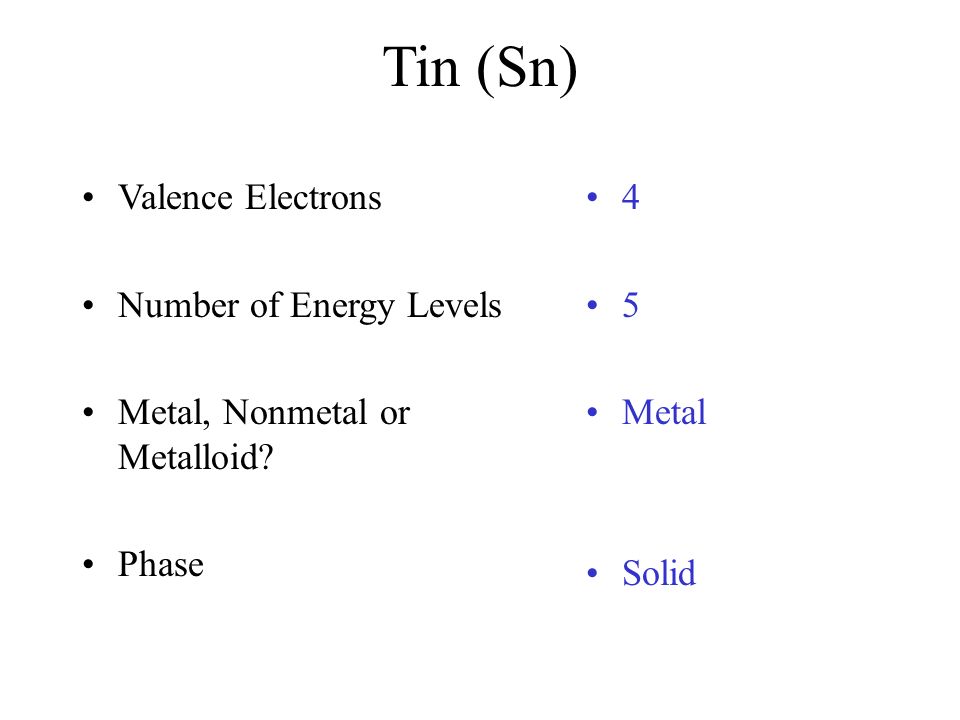
Valence Electrons of Tin
See the picture below to know the valence electron of the Tin.
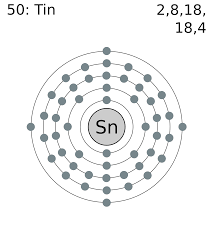
What is The Electron Configuration of Tin
The full Electron Configuration of Tin is 1s 22s 22p 63s 23p 64s 23d 104p 65s 24d 105p 2
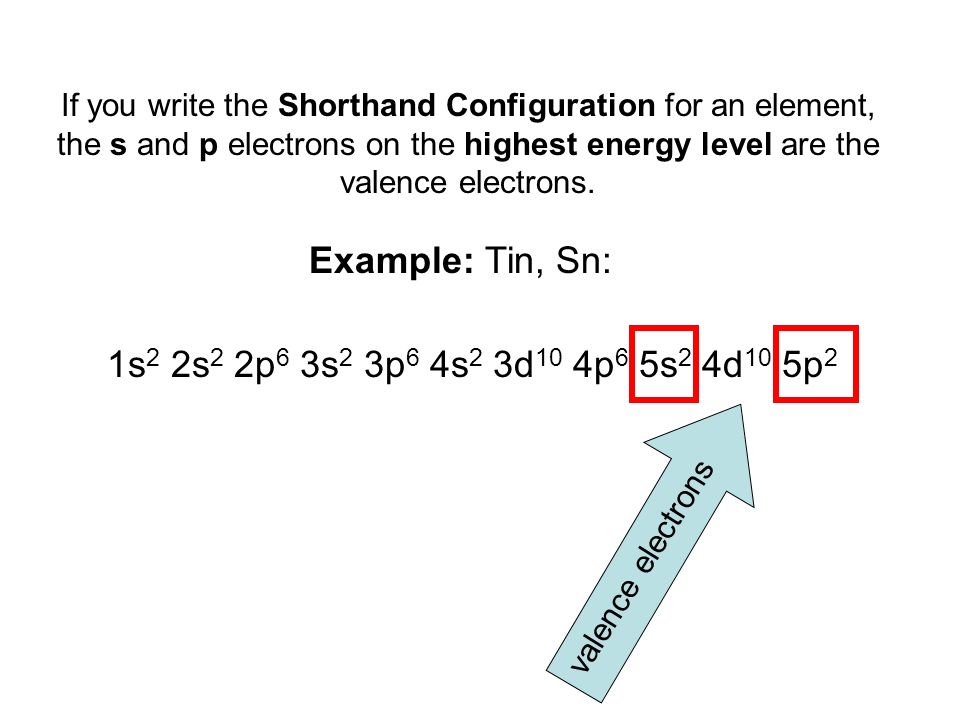
How Many Valence Electrons Does Tin Have
The total number of the valence electron in the outer shell of tin is 4