Sodium electron configuration is one of the most commonly studied topics in chemistry because it explains how the 11 electrons of a sodium atom are arranged in different energy levels and orbitals. Sodium (Na) is an alkali metal with atomic number 11 and is known for being a soft, highly reactive, silver-white metal.
Understanding the electron configuration of sodium helps students learn about valence electrons, electron shells, orbital filling, chemical bonding, and the periodic table.
- Phosphorus Valence Electrons
- S Valence Electrons
- Cl Valence Electrons
- Ar Valence Electrons
- C Electron Configuration
- Neon Electron Configuration
- V Electron Configuration
- Potassium Valence Electrons
- Ca Valence Electrons
- Titanium Valence Electrons
Sodium Electron Configuration
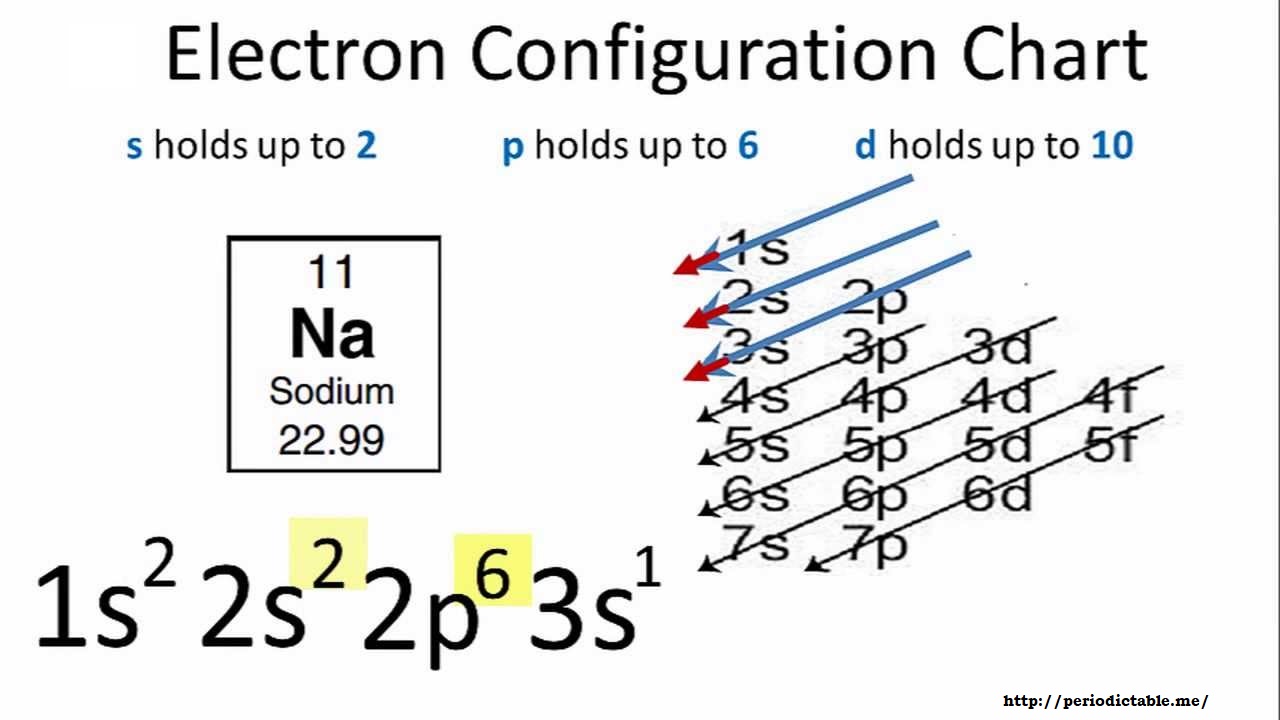
The electron configuration of sodium (Na) is:
1s² 2s² 2p⁶ 3s¹
Noble Gas Electron Configuration
The shorthand (noble gas) electron configuration of sodium is:
[Ne] 3s¹
This notation shows that sodium has the same electron arrangement as neon, with one additional electron occupying the 3s orbital.
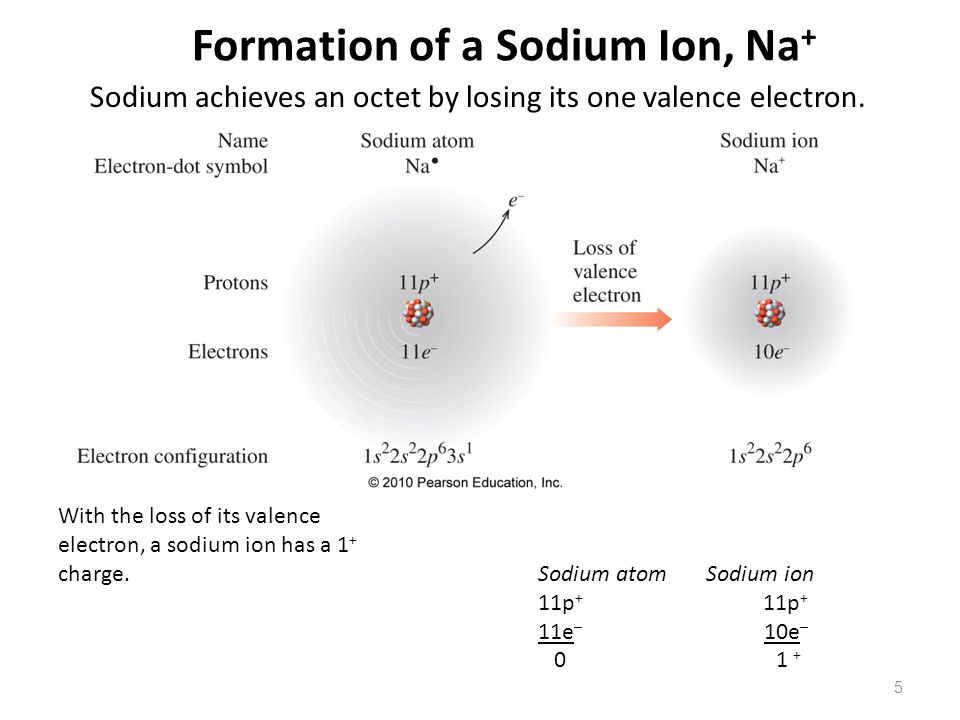
Electron Configuration For Na Ion
If we talk about an electronic configuration of sodium ion then it can write this:
[Ne] 3s1
Unabbreviated Electron Configuration For Na
The unabbreviated electron configuration for Na can be represented as:
1s22s22p63s1
How Do You Find The Electron Configuration For Sodium?
Finding the electron configuration of sodium is easy if you know its atomic number.
Step 1: Find the Atomic Number
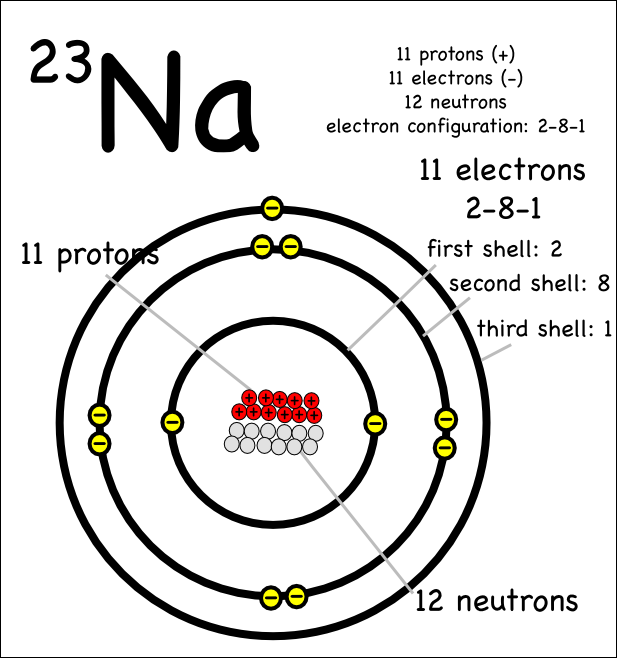
Sodium has an atomic number of 11, meaning it contains 11 electrons.
Step 2: Fill Orbitals in Order
Electrons occupy orbitals according to the Aufbau Principle.
- 1s → 2 electrons
- 2s → 2 electrons
- 2p → 6 electrons
- 3s → 1 electron
Step 3: Write the Configuration
Therefore, the electron configuration is:
1s² 2s² 2p⁶ 3s¹
You can check the position of Na on the periodic table homepage article.
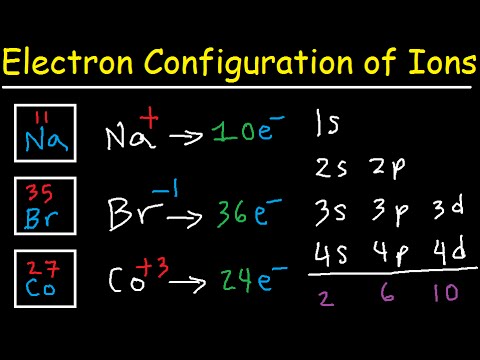
Then 2p orbit can hold 6 electrons. The remaining 1 electron of sodium shifts to the 3s orbit. In such a way you can find the electron configuration of Na.
How Many Electrons Are in the p Orbital of Sodium?
P orbit can consists of up to 6 electrons so 6 electrons are held by the 2p orbit of sodium.
How Many Protons and electrons are in sodium?
Mostly all elements have the same number of electrons and protons and in the case of sodium, there are 11 numbers of protons and electrons.
Why Is Sodium So Reactive?
Sodium is highly reactive because it has only one valence electron.
Removing this electron gives sodium a stable noble gas electron configuration similar to neon. As a result, sodium readily reacts with water, oxygen, chlorine, and other elements to achieve a stable electron arrangement.
Conclusion
The sodium electron configuration is 1s² 2s² 2p⁶ 3s¹, showing that sodium has 11 electrons distributed across three energy levels. Its single 3s valence electron makes sodium highly reactive and explains why it readily forms the Na⁺ ion. Learning sodium’s electron configuration also provides a strong foundation for understanding atomic structure, orbital notation, valence electrons, chemical bonding, periodic trends, and ion formation.
Leave a Reply