Copper valence electrons play a key role in understanding the element’s chemical properties, bonding behavior, and electrical conductivity. In this guide, you’ll learn how many valence electrons Copper (Cu) has, its electron configuration, Lewis dot structure, oxidation states, and other important atomic properties. Whether you’re a student, teacher, or chemistry enthusiast, this easy-to-understand explanation covers everything you need to know about Copper valence electrons and why this transition metal is widely used in electrical wiring, electronics, construction, and industrial applications.
- Flerovium Valence Electrons
- Helium Valence Electrons
- Plutonium Valence Electrons
- Lithium Valence Electrons
- Mercury Valence electrons
- Americium Valence Electrons
- Neptunium Valence Electrons
- Oxygen Valence Electrons
- Moscovium Valence Electrons
- Sodium Valence Electrons
- Cesium valence electrons
- Magnesium Valence Electrons
- Bismuth Valence electrons
- Aluminum Valence Electrons
- Silicon Valence Electrons
- Beryllium Valence Electrons
- Livermorium Valence Electrons
- Fluorine Valence Electrons
- Radon Valence electrons
- Carbon Valence Electrons
- Xenon Valence Electrons
- Neon Valence Electrons
- Tennessine Valence Electrons
- Antimony Valence Electrons
- Radium Valence Electrons
- Oganesson Valence Electrons
- Iodine Valence Electrons
- Lead Valence electrons
- Sulfur Valence Electrons
- Tellurium Valence Electrons
- Boron Valence Electrons
- Gold Valence Electrons
- Nobelium Valence Electrons
- Neon Valence Electrons
- Hydrogen Valence Electrons
- Nitrogen Valence Electrons
- Phosphorus Valence Electrons
How many valence electrons does Copper have?
Copper is a versatile chemical element with the atomic number 29 and the chemical symbol Cu. It is a soft, malleable, and ductile metal known for its distinctive reddish-orange appearance when freshly exposed. Copper is highly resistant to corrosion and offers excellent thermal and electrical conductivity, making it one of the most valuable metals used in modern industries. Its durability and recyclability also make it an environmentally friendly material.
Copper is widely used in electrical wiring, electronics, power transmission, construction, plumbing, telecommunications, and renewable energy systems because of its outstanding electrical conductivity. From household wiring and electric motors to circuit boards and industrial machinery, copper plays a vital role in everyday life. Its high efficiency, long lifespan, and reliable performance continue to make copper one of the most essential metals for residential, commercial, and industrial applications worldwide.
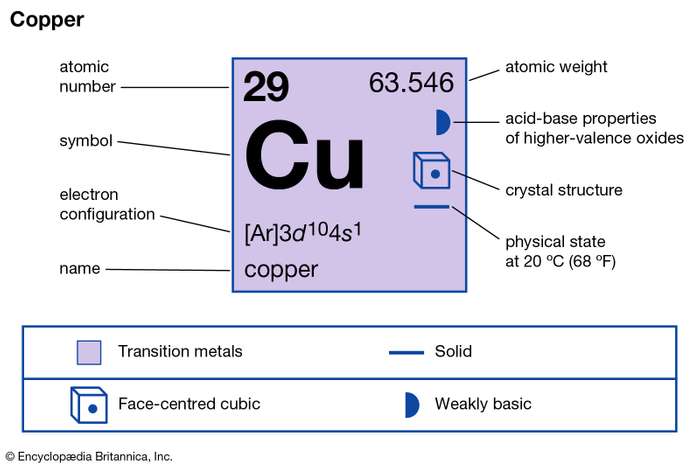
Copper has its directly occurring form in nature in many countries around the world. Furthermore, the copper has the numerous usages since the very ancient time in history. Moreover, copper is even an integral part of the human bodies. It’s the significant part of human organs as the respiratory enzymes.
Copper Valence Electron Dot Diagram
You can understand the valence electrons with better insight by the dot diagram. We call the dot diagram as Lewis dot diagram for valence electrons of elements. The dot diagram simply represents the numbers of valence electrons of atoms. It draws the dots around the symbol of copper to show up the valence electrons.
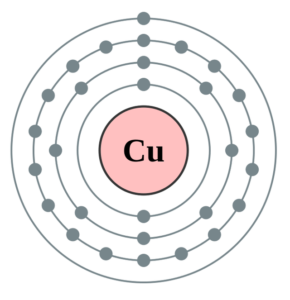
The numbers of dots remain equal to the numbers of valence electrons of atoms. Lewis dot diagram can help you in the proper analysis of copper valence electrons.
Valency of Copper
Copper commonly exhibits +1 (cuprous) and +2 (cupric) valency because it is a transition metal with a unique electron configuration. Unlike many main-group elements, copper can lose either one or two electrons, allowing it to form compounds with different oxidation states. This is why the valency of copper, oxidation state of copper, and electronic configuration of copper are important concepts in chemistry.
Since copper is a metal, it generally forms ionic compounds rather than covalent bonds with non-metals. As a result, the valency of copper depends on the specific compound it forms. For example, copper has a +1 valency in copper(I) oxide (Cu₂O) and a +2 valency in copper(II) oxide (CuO). Understanding the valency of copper in different compounds helps explain its chemical properties, reactions, and practical applications.