Electron Configuration for Silver (Ag) is one of the most searched chemistry topics because silver has an exceptional electron configuration that differs from the expected electron filling order. Silver (Ag) has an atomic number of 47 and belongs to Group 11 of the periodic table. It is a soft, shiny, white transition metal known for having the highest electrical conductivity, thermal conductivity, and reflectivity of any metal.
In this guide, you’ll learn the correct electron configuration of silver, orbital diagram, noble gas notation, number of valence electrons, and why silver follows an exceptional electron arrangement.
- Bromine Electron Configuration
- Sodium Electron Configuration
- Magnesium Electron Configuration
- Aluminum Electron Configuration
- Silicon Electron Configuration
- Sulfur Electron Configuration
- Chlorine Electron Configuration
- Phosphorus Electron Configuration
- Argon Electron Configuration
- Potassium Electron Configuration
Electron Configuration For Silver
It is found in the Earth’s crust in the free and pure elemental form in the form of an alloy with gold and other metals, and also in minerals like chlorargyrite and argentite. Silver is mostly produced as a byproduct of gold, copper, zinc and lead refining.. It has been valued as a precious metal for a very long time.
This metal is used in many bullion coins, and also sometimes alongside gold. It is much less abundant as a native metal while it is more abundant than gold. The purity of silver is typically measured on a per-mile basis. The 94%-pure alloy is described as 0.940% Pure.
Silver has had an enduring role in most human cultures as one of the seven metals of antiquity. Other than an investment and as a currency medium ( bullion and coins), It is also used in water filtration, solar panels, ornaments, jewelry, high-value tableware, and utensils.
What Is The Electron Configuration of Ag?
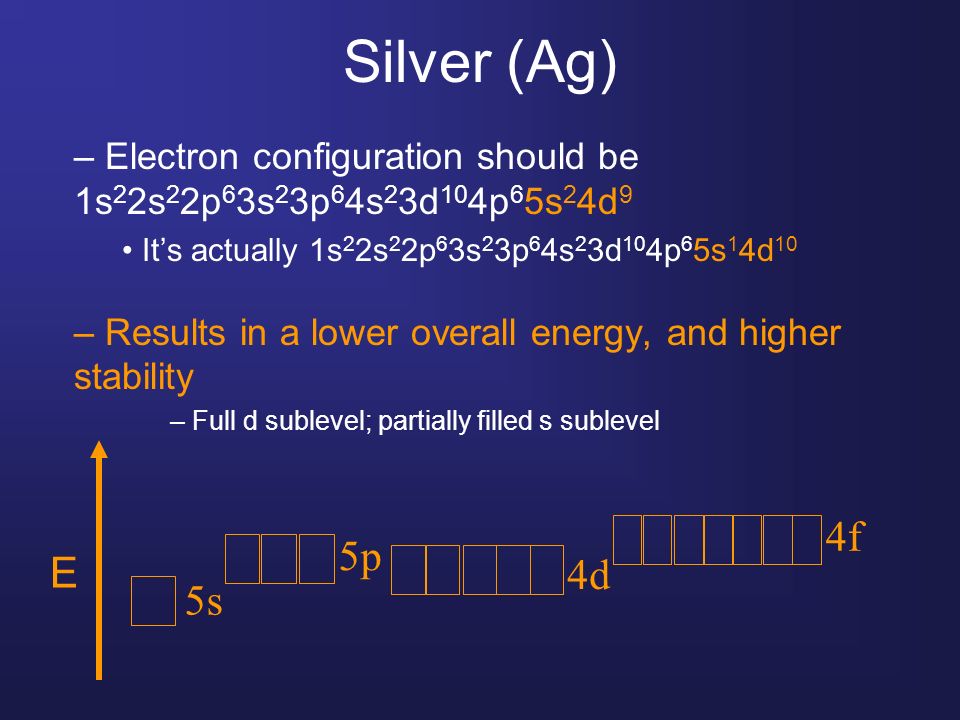
The electron configuration for silver (Ag) depends upon the location meant for silver in the fifth row and eleventh column of the periodic table. That is why the electron configuration for (Ag) silver should end as 4d9, and hence it is 1s22s22p63s23p64s23d104p65s24d9
Silver on the Periodic Table
Silver belongs to the transition metals and is located in:
- Group 11
- Period 5
- d-block
Silver is closely related to:
- Copper (Cu)
- Gold (Au)
These elements are often called the coinage metals because of their historical use in coins and currency
Properties of Silver
- Chemical Symbol: Ag
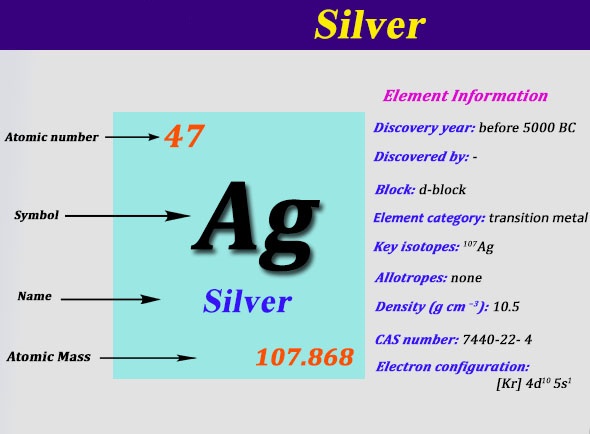
- Atomic Number: 47
- Atomic Mass: 107.8682
- Density: 10.49 g/cm³
- Melting Point: 961.8°C
- Boiling Point: 2162°C
- Oxidation State: +1 (most common)
- Electron Configuration: [Kr] 4d¹⁰ 5s¹
How Many Valence Electrons Does Silver Have
Silver has 1 valence electron.
The outermost energy level contains only one electron in the 5s orbital.
Valence Electron Configuration
5s¹
This single valence electron is responsible for many of silver’s physical and chemical properties, including its excellent electrical conductivity.
Silver Number of Valence Electrons
There is only one valence electron in the outer shell of the Silver. For more information, you can also refer to the pictures provided in this post.
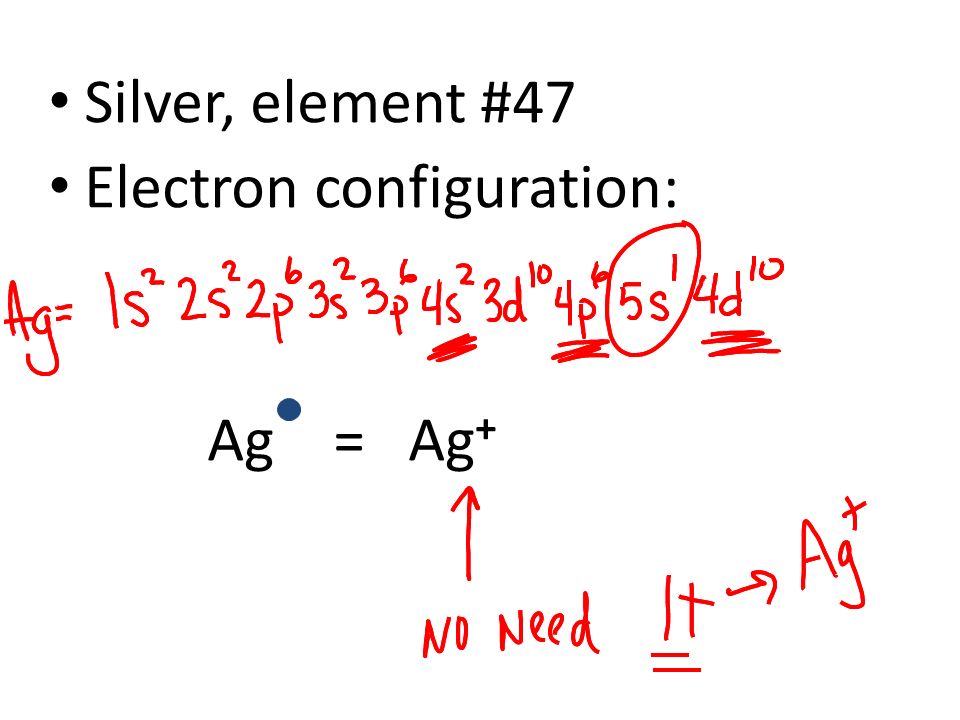
The electron configuration for silver (Ag) is [Kr] 4d¹⁰ 5s¹, making it one of the well-known exceptions to the standard electron filling order. This fully filled 4d subshell gives silver greater stability and contributes to its remarkable electrical conductivity, thermal conductivity, and chemical properties. Understanding the electron configuration of silver, its orbital diagram, and valence electrons is essential for students studying chemistry, atomic structure, and the periodic table.