Want to understand Oxygen Valence Electrons in the easiest way? You’re in the right place. Valence electrons are the outermost electrons of an atom that determine how an element forms chemical bonds and reacts with other substances. Knowing the number of valence electrons in oxygen is essential for learning chemical bonding, electron configuration, Lewis dot structures, oxidation states, and basic chemistry concepts.
In this guide, you’ll learn how many valence electrons oxygen has, why they are important, and how they influence oxygen’s chemical properties. We’ll also explain oxygen’s electron configuration, valency, bonding behavior, and simple examples to help students, teachers, and chemistry enthusiasts understand the topic quickly and easily.
- Flerovium Valence Electrons
- Mercury Valence electrons
- Moscovium Valence Electrons
- Bismuth Valence electrons
- Livermorium Valence Electrons
- Radon Valence electrons
- Tennessine Valence Electrons
- Antimony Valence Electrons
- Oganesson Valence Electrons
- Tellurium Valence Electrons
- Nobelium Valence Electrons
- Xenon Valence Electrons
- Neptunium Valence Electrons
- Cesium valence electrons
- Plutonium Valence Electrons
- Iodine Valence Electrons
- Americium Valence Electrons
- Radium Valence Electrons
- Gold Valence electrons
- Lead Valence electrons
For Blank Periodic Table And Periodic Table Valency Of Elements.
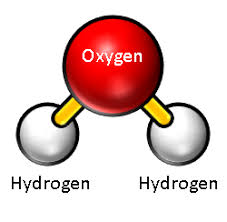
Oxygen Valence Electrons
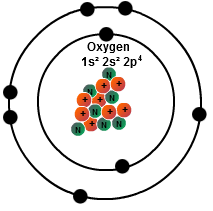
Oxygen has 8 valence electrons. Hence it belongs to group 6 of the periodic table. This means it has a total of 2 electrons in the first shell (or K shell), and 6 electrons in the first shell (or K shell). Hence it has a valency of 6.
Latest Periodic Table Of Lebeled And Periodic Table Atomic Mass Number.
What is the Valence of Oxygen in Water
The valence of oxygen in water (H₂O) is 2, meaning one oxygen atom forms two covalent bonds with two hydrogen atoms to create a stable water molecule. This ability to bond with two hydrogen atoms makes oxygen essential for the formation of water and many other chemical compounds. Understanding the valency of oxygen, its electronic configuration, and chemical bonding is a fundamental concept in chemistry and is commonly asked in school exams and competitive tests.
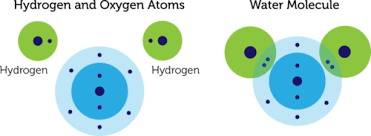
An oxygen atom has 8 electrons arranged in two electron shells. The first (inner) shell contains 2 electrons, while the second (outer or valence) shell contains 6 electrons. Since oxygen needs 2 more electrons to complete its octet, it shares one electron with each of two hydrogen atoms, forming two single covalent bonds. As a result, oxygen has a valency of 2, making the water molecule (H₂O) stable and chemically balanced.
How many valence electrons does oxygen have?
Click Here To More Information About Periodic Table Charges Of Elements And Periodic Table Of Trends.
Hydrogen has only one electron which revolves around the proton in a single orbital. Hence both the atoms of the elements are unstable.
To achieve an inert gas electronic configuration or an octet, the oxygen atom must contain 2 more electrons in its outer shell. So to reach this stage, it forms a covalent bond with two Hydrogen atoms to form a covalent bond.
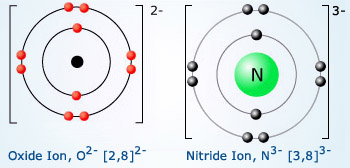
Hence the valency of oxygen in water is 2 since it shares two electrons with Hydrogen to reach the inert gas octet electronic configuration.
Find Our Periodic Table Of Non-Metals And Electronegativity Chart.
Frequently Asked Questions (FAQs)
Q1. What is the valency of oxygen?
A: The valency of oxygen is 2. Oxygen has six electrons in its outermost shell and requires two more electrons to complete its octet. Therefore, it usually forms two chemical bonds with other atoms.
Q2. Why is the valency of oxygen 2?
A: Oxygen has the electronic configuration 2,6, meaning it has six valence electrons. Since it needs two additional electrons to achieve a stable octet, its valency is 2.
Q3. Is the valency of oxygen always 2?
A: In most common compounds, oxygen has a valency of 2. However, its oxidation state can vary in special compounds such as peroxides, superoxides, and compounds containing fluorine. Valency and oxidation state are different concepts.
Q4. What are some examples of oxygen’s valency?
A: Common examples include:
- Water (H₂O): Oxygen forms two single bonds with two hydrogen atoms.
- Carbon dioxide (CO₂): Oxygen forms two bonds with carbon.
- Magnesium oxide (MgO): Oxygen combines with magnesium using its valency of 2.
- Calcium oxide (CaO): Oxygen bonds with calcium in a 1:1 ratio due to its valency.
These examples demonstrate why oxygen is known as a divalent element.