Scandium Electron Configuration: Scandium is a transition metal and the first element of the d-block in the periodic table. It has the atomic number 21 and the chemical symbol Sc. Due to its lightweight, high strength, and corrosion resistance, scandium is widely used in aerospace components, sports equipment, high-performance alloys, and metal halide lamps.
If you’re studying chemistry or preparing for exams like JEE, NEET, GCSE, SAT Chemistry, or university entrance tests, understanding scandium valence electrons, electron configuration, and valency is essential.
- Germanium Electron Configuration
- Arsenic Electron Configuration
- Selenium Electron Configuration
- Bromine Electron Configuration
- Krypton Electron Configuration
- Rubidium Electron Configuration
- Strontium Electron Configuration
- Yttrium Electron Configuration
Scandium Electron Configuration
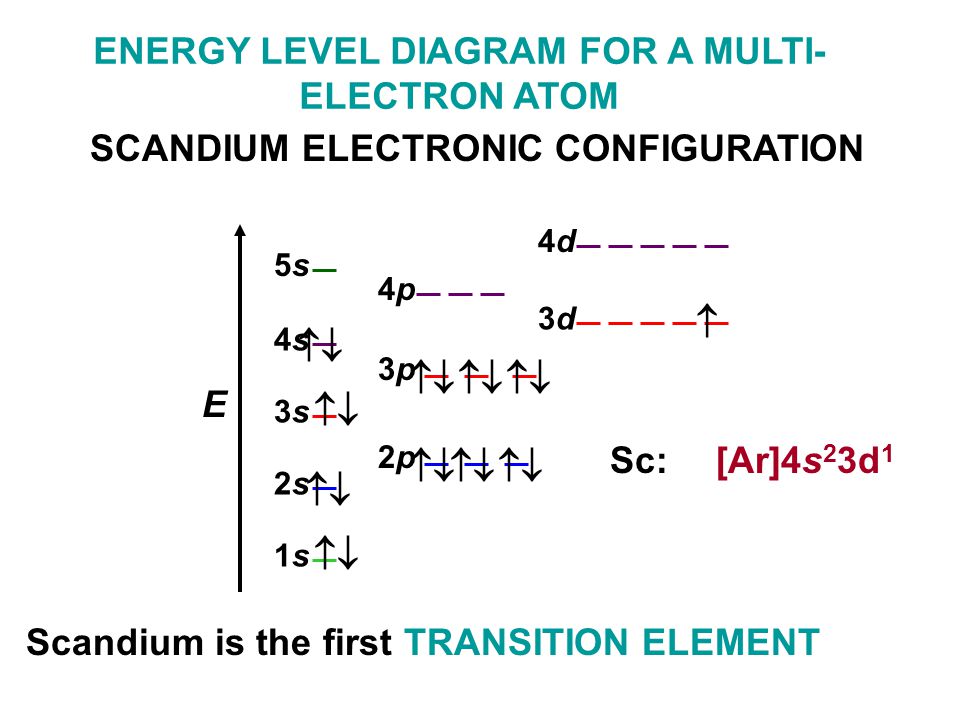
Scandium (Sc) has an atomic number of 21, meaning a neutral scandium atom contains 21 electrons.
Its electron configuration is:
1s² 2s² 2p⁶ 3s² 3p⁶ 3d¹ 4s²
The outermost shell (n = 4) contains:
4s² = 2 electrons
Therefore,
Scandium has 2 valence electrons.
However, because scandium is a transition metal, the 3d¹ electron also participates in chemical bonding. For this reason, scandium commonly forms compounds with an oxidation state of +3.
Electron Configuration For Scandium ion
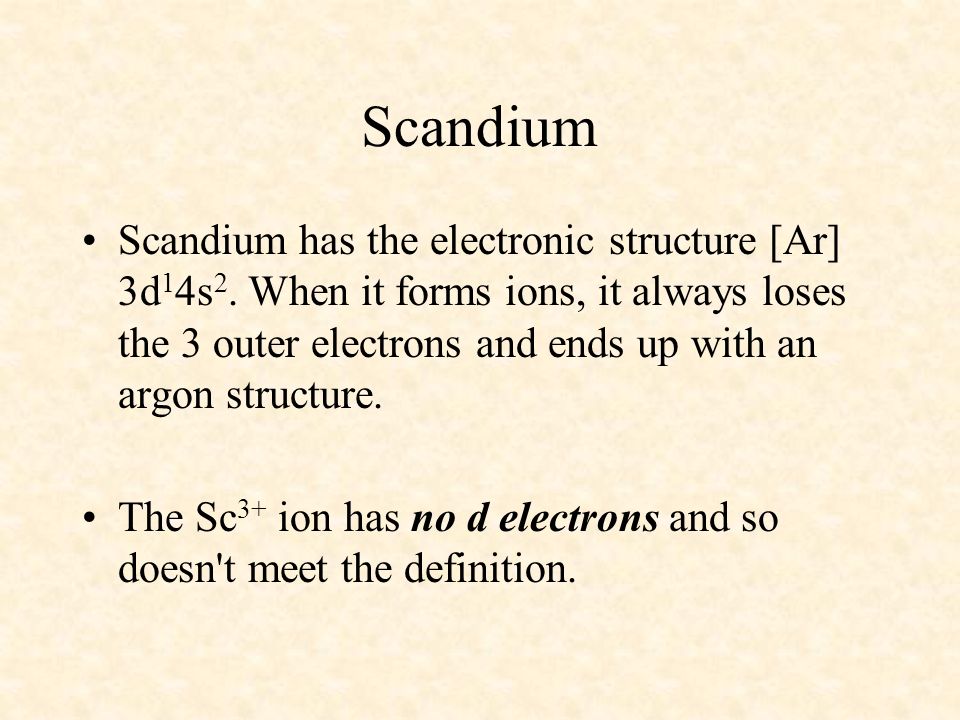
Electron configuration of Sc ion can be represented by the distribution of electrons in the shell i.e. 1s² 2s² 2p⁶ 3s² 3p⁶ 3d¹ 4s² or [Ar] 3d14s2.
Full Electron Configuration For Sc
Full electron configuration for Sc can be represented as: [Ar] 1s² 2s² 2p⁶ 3s² 3p⁶ 3d¹ 4s².
What is The Electron Configuration of Scandium
The electron configuration of Scandium (Sc) describes how its 21 electrons are arranged in different atomic orbitals. Understanding the electron configuration helps explain scandium’s chemical properties, bonding behavior, oxidation state, and position in the periodic table.
Scandium has an atomic number of 21, meaning a neutral scandium atom contains 21 electrons.
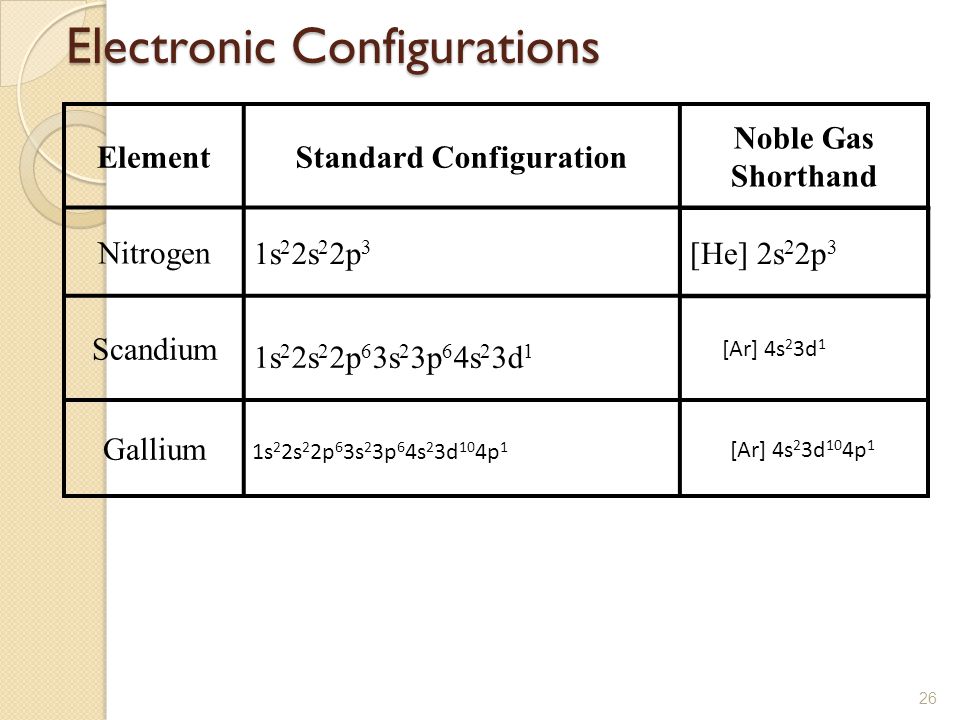
The complete electron configuration of scandium is:
1s² 2s² 2p⁶ 3s² 3p⁶ 3d¹ 4s²
The shorthand (noble gas) electron configuration is:
[Ar] 3d¹ 4s²
Because of its [Ar] 3d¹ 4s² electron configuration, scandium most commonly exhibits an oxidation state of +3, making it an important element in coordination chemistry, aerospace alloys, and advanced materials.
How Many Valence Electrons are in Scandium
Valence electrons are a number of electrons lie in the outer most shell. There are 21 electrons which are present in the third or outer most shell i.e. 3d14s2.
Frequently Asked Questions (FAQs)
Q1. What is the electron configuration of Scandium (Sc)?
A: The complete electron configuration of scandium is:
1s² 2s² 2p⁶ 3s² 3p⁶ 3d¹ 4s²
Its shorthand electron configuration is:
[Ar] 3d¹ 4s²
This configuration shows that scandium has 21 electrons distributed among its atomic orbitals.
Q2. What is the orbital diagram of Scandium?
A: The orbital diagram of scandium is represented as:
1s (↑↓) 2s (↑↓) 2p (↑↓)(↑↓)(↑↓) 3s (↑↓) 3p (↑↓)(↑↓)(↑↓) 4s (↑↓) 3d (↑)
The single electron in the 3d orbital makes scandium the first element of the d-block (transition metals).
Q3. How many valence electrons does Scandium have?
A: Scandium has 3 valence electrons.
These include:
- Two electrons in the 4s orbital
- One electron in the 3d orbital
These electrons participate in chemical bonding and are responsible for scandium’s common +3 oxidation state.
Q4. Why is Scandium classified as a transition metal?
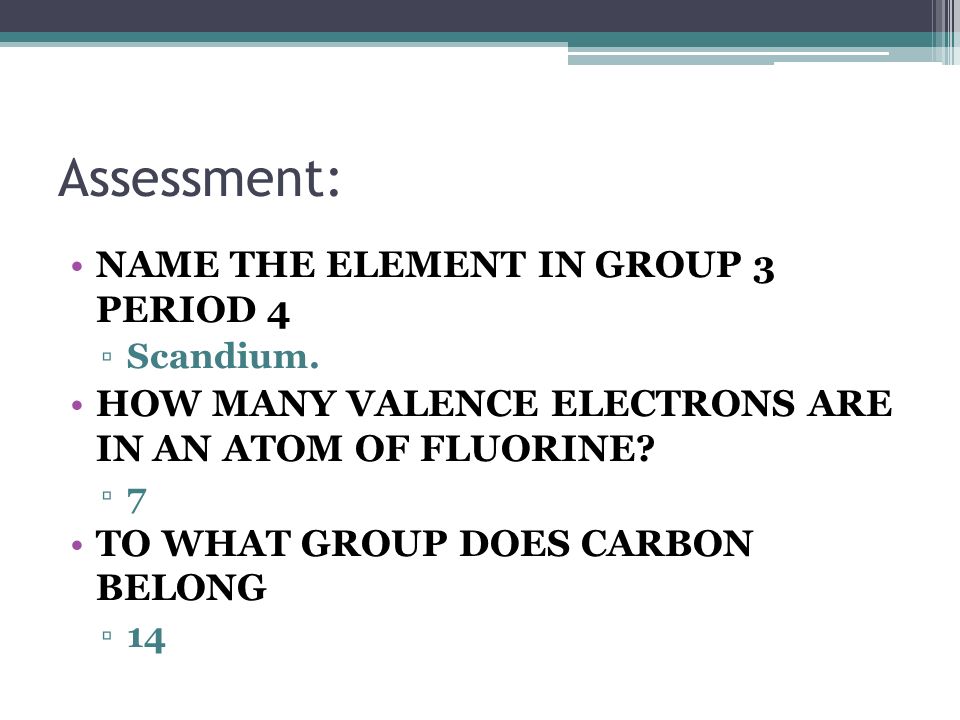
A: Scandium is classified as a transition metal because it has a partially filled d-subshell in its atom. Its electron configuration [Ar] 3d¹ 4s² places it at the beginning of the 3d transition series (Group 3, Period 4). This unique electron arrangement gives scandium many of the characteristic properties of transition elements, including variable bonding behavior and the ability to form coordination compounds.
Leave a Reply