Magnesium Valence Electrons: Magnesium (Mg) is a chemical element with the atomic number 12 and belongs to Group 2 (Alkaline Earth Metals) of the periodic table. It is a lightweight, silvery-gray metal that is the eighth most abundant element in Earth’s crust and one of the most common elements in the universe. Magnesium has an atomic mass of 24.305 u, a melting point of 650°C (923 K), and a boiling point of 1,091°C (1,364 K). Its electron configuration is 1s² 2s² 2p⁶ 3s². Magnesium plays a vital role in human health by supporting muscle function, nerve transmission, bone strength, heart health, and energy production. It is also widely used in aircraft manufacturing, automotive parts, construction materials, electronics, pyrotechnics, and medicines due to its low density and high strength.
- Flerovium Valence Electrons
- Moscovium Valence Electrons
- Livermorium Valence Electrons
- Tennessine Valence Electrons
- Oganesson Valence Electrons
- Nobelium Valence Electrons
- Neptunium Valence Electrons
- Plutonium Valence Electrons
- Americium Valence Electrons
- Gold Valence electrons
- Mercury Valence electrons
- Lead Valence electrons
- Bismuth Valence electrons
- Radon Valence electrons
- Radium Valence Electrons
- Antimony Valence Electrons
- Tellurium Valence Electrons
- Iodine Valence Electrons
- Xenon Valence Electrons
- Caesium valence electrons
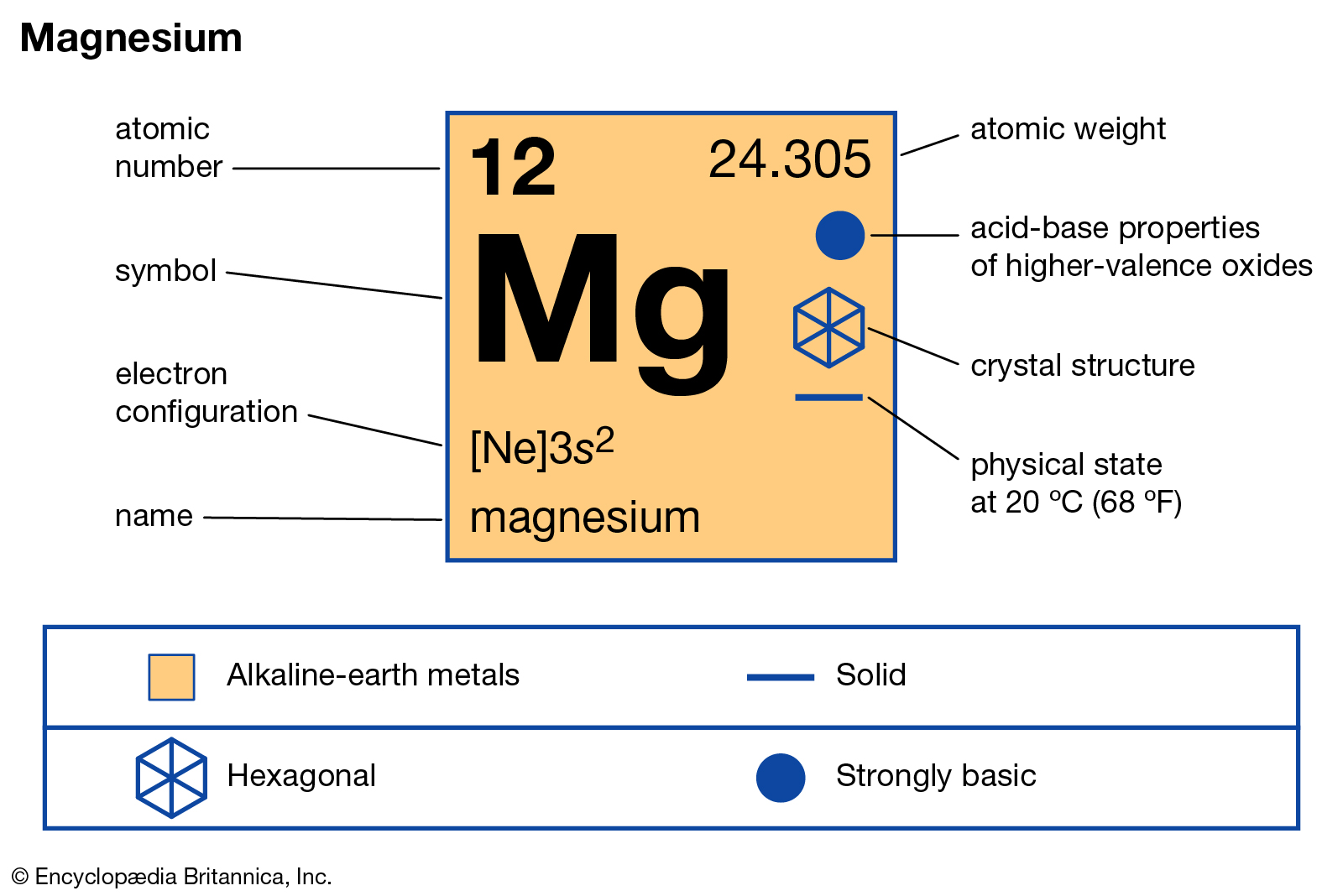
Magnesium is a highly reactive metal, although it reacts slowly with cold water because a thin protective layer of magnesium hydroxide forms on its surface. It reacts much more rapidly with hot water and steam, producing magnesium hydroxide (or magnesium oxide with steam) and hydrogen gas. Magnesium also burns with a brilliant white flame in oxygen, making it useful in flares, fireworks, and emergency signaling devices. Because of its excellent strength-to-weight ratio and corrosion resistance when alloyed, magnesium is an important material in engineering, transportation, and industrial manufacturing.
Magnesium Valence Electrons Dot Diagram
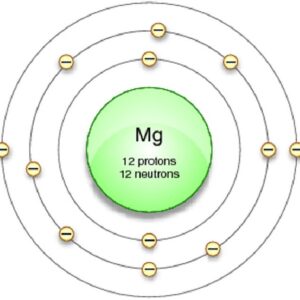
The Magnesium Valence Electrons Dot Diagram (also called the Lewis Dot Structure of Magnesium) shows the two valence electrons present in the outermost shell of a magnesium atom. Since magnesium has 12 electrons, they are arranged in shells as 2, 8, 2. The first shell contains 2 electrons, the second shell contains 8 electrons, and the third (outermost) shell contains 2 electrons. In the Lewis dot diagram, these two outermost electrons are represented by two dots around the symbol “Mg.” These valence electrons explain why magnesium commonly loses two electrons to form the stable Mg²⁺ ion during chemical reactions. Understanding the Magnesium Valence Electrons Dot Diagram, electron shell configuration, Lewis symbol, and electron distribution helps students learn chemical bonding, periodic trends, and ionic compound formation more easily.
Valency of Magnesium
We know that the atomic number of magnesium is 12 and its electron configuration is 2,8,2. So, here the magnesium has 2 electrons, so its valency will be 2 because it will lose two electrons to achieve the noble gas configuration which is (2,8).