Understanding the Fluorine electron configuration is one of the easiest ways to learn how electrons are arranged inside an atom. In chemistry, electron configuration explains the distribution of electrons among different atomic orbitals. This concept plays a vital role in atomic structure, quantum chemistry, chemical bonding, periodic trends, and molecular orbital theory.
Whether you’re a student preparing for school exams, NEET, JEE, or simply learning chemistry, this guide covers everything you need to know about the electron configuration of Fluorine (F).
- H Electron Configuration
- He Electron Configuration
- Li Electron Configuration
- Beryllium Electron Configuration
- Boron Electron Configuration
- C Electron Configuration
- Neon Electron Configuration
- Vanadium Electron Configuration
- Cl Electron Configuration
As per which electron configuration explains the distribution of electrons for the atom or the molecule in the context of molecular orbital and this electron configuration can be made for the atom of any chemical element.
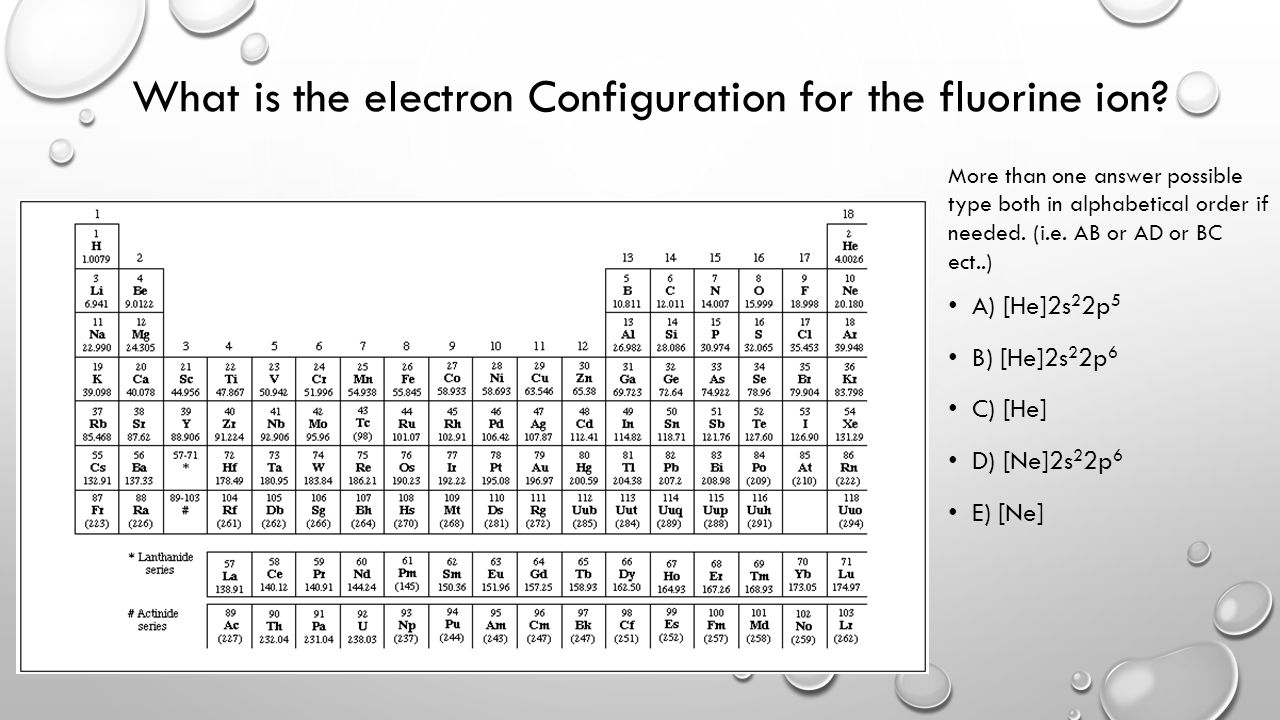
Today in this article we are going to talk about the electron configuration for the Fluorine.
Fluorine Number of Valence Electrons
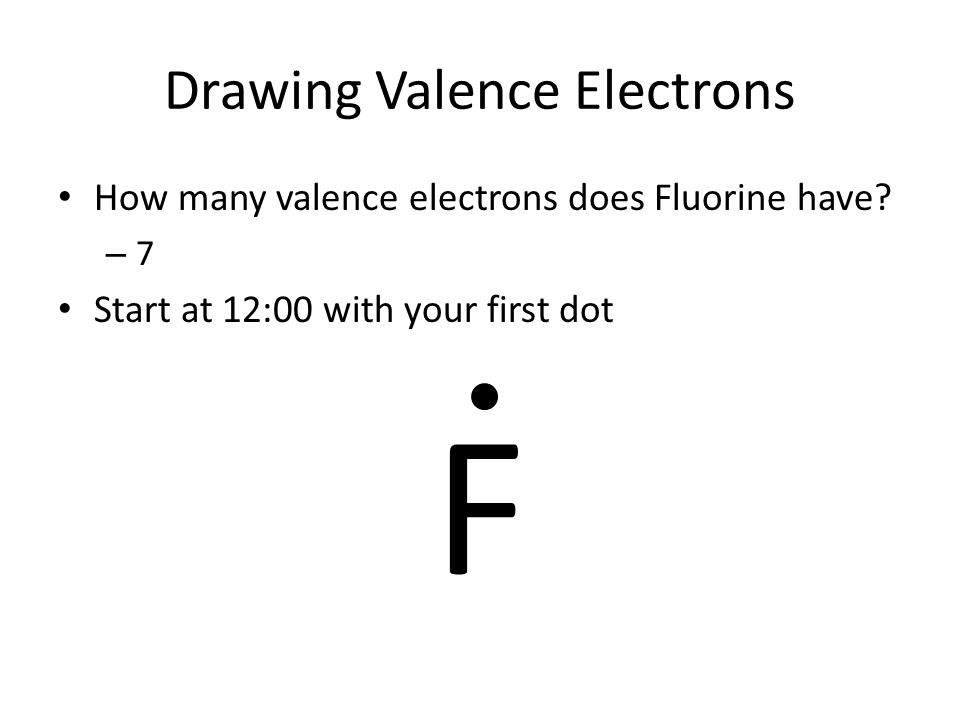
Fluorine has 7 valence electrons.
These are found in the outermost shell:
- 2s²
- 2p⁵
Total:
2 + 5 = 7 valence electrons
Because the outer shell needs 8 electrons to become stable (octet rule), fluorine requires only one additional electron.
This is why fluorine is one of the most electronegative elements in the periodic table and readily forms chemical bonds.
What is Electron For Fluorine
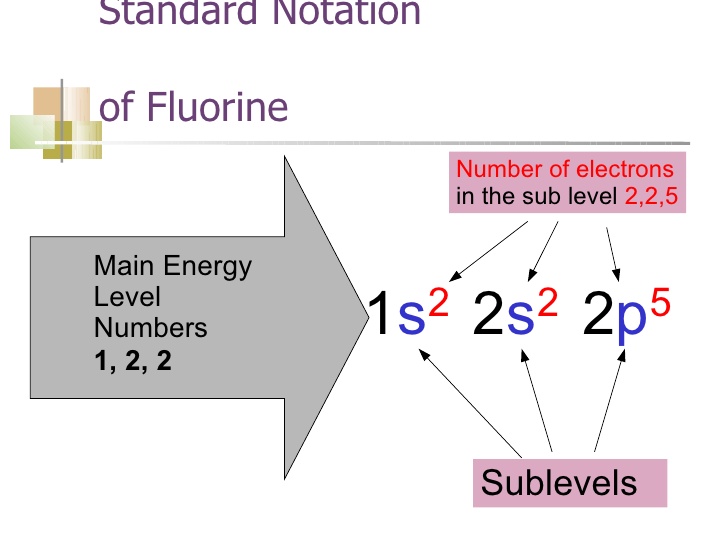
As we have explained above the whole equation of Fluorine continuing it further the Fluorine is basically the 9th element which is having the 9 electrons in totality. In this whole equation, the first two electrons of the Fluorine will go to the 1s orbital and the next 2 electrons will be held by the 2s orbital. The remaining 5 will go to the 2p orbital.
Electronic Configuration For Fluorine ion
The electronic configuration for the Fluorine ion is 1s² 2s² 2p⁵ , showing that fluorine has 9 total electrons arranged across the 1s, 2s, and 2p orbitals. With 7 valence electrons, fluorine requires only one additional electron to complete its octet, making it highly reactive and one of the strongest oxidizing elements in the periodic table. Understanding fluorine’s electron configuration helps explain its chemical bonding, oxidation state, and behavior in ionic and covalent compounds.