Potassium Electron Configuration: Potassium (K) is the 19th element on the periodic table and is one of the most important alkali metals in chemistry. With an atomic number of 19, potassium has a unique electron configuration that explains its high reactivity, chemical bonding, and position in the periodic table. Whether you’re a student preparing for exams or simply learning about atomic structure, understanding the electron configuration of potassium (K) is essential for mastering chemistry concepts.
- H Electron Configuration
- He Electron Configuration
- Li Electron Configuration
- Beryllium Electron Configuration
- Electron Configuration for Boron
- C Electron Configuration
- Fluorine Electron Configuration
- Electron Configuration for Neon
- Vanadium Electron Configuration
- Clorine Electron Configuration
Potassium Electron Configuration
The chemical symbol K comes from the Neo-Latin word Kalium, while the name potassium originates from potash, a substance historically obtained from plant ashes. In nature, potassium is never found as a free metal because it reacts rapidly with air and water. Instead, it exists in the form of ionic compounds and mineral salts. As a member of the Group 1 alkali metals, potassium has one valence electron in its outermost shell, allowing it to lose that electron easily and form a K⁺ ion. This property makes potassium highly reactive and an excellent conductor of electricity in its metallic form.
Pure potassium is a soft, silvery-white metal that oxidizes almost instantly when exposed to air. It reacts vigorously with water, producing potassium hydroxide (KOH) and hydrogen gas, releasing enough heat to ignite the hydrogen and create a distinctive lilac-colored flame. These fascinating chemical properties are directly related to the orbital arrangement of its electrons. In this guide, you’ll learn the potassium electron configuration, electron shell distribution, orbital diagram, Bohr model, Lewis dot structure, and the role of its valence electron in chemical reactions.
Electron Configuration for Potassium Ion
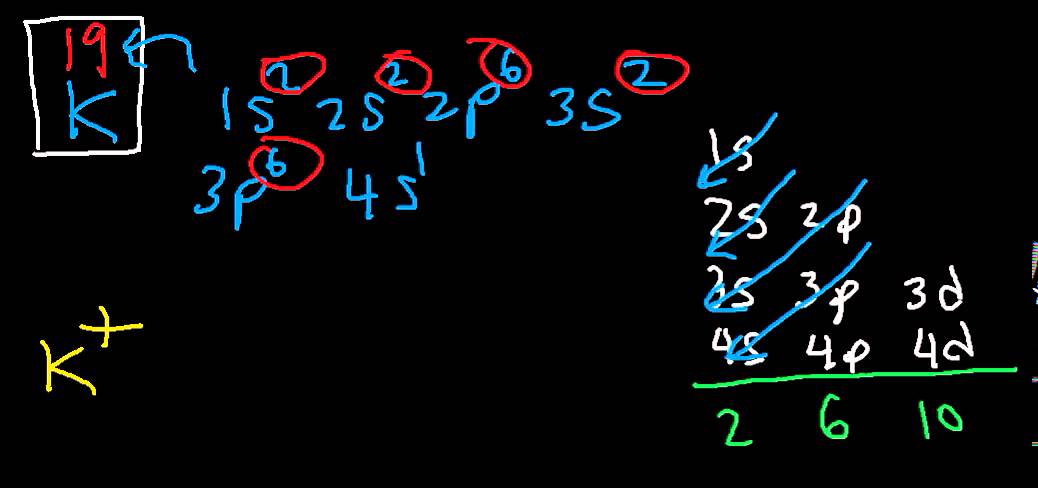
You can see the electron configuration for K Ion in the picture below;
How Many Valence Electrons Are in K?
The potassium Number of Valence Electron is nineteen since Potassium is the alkali metal.
Ground State Electron Configuration for K
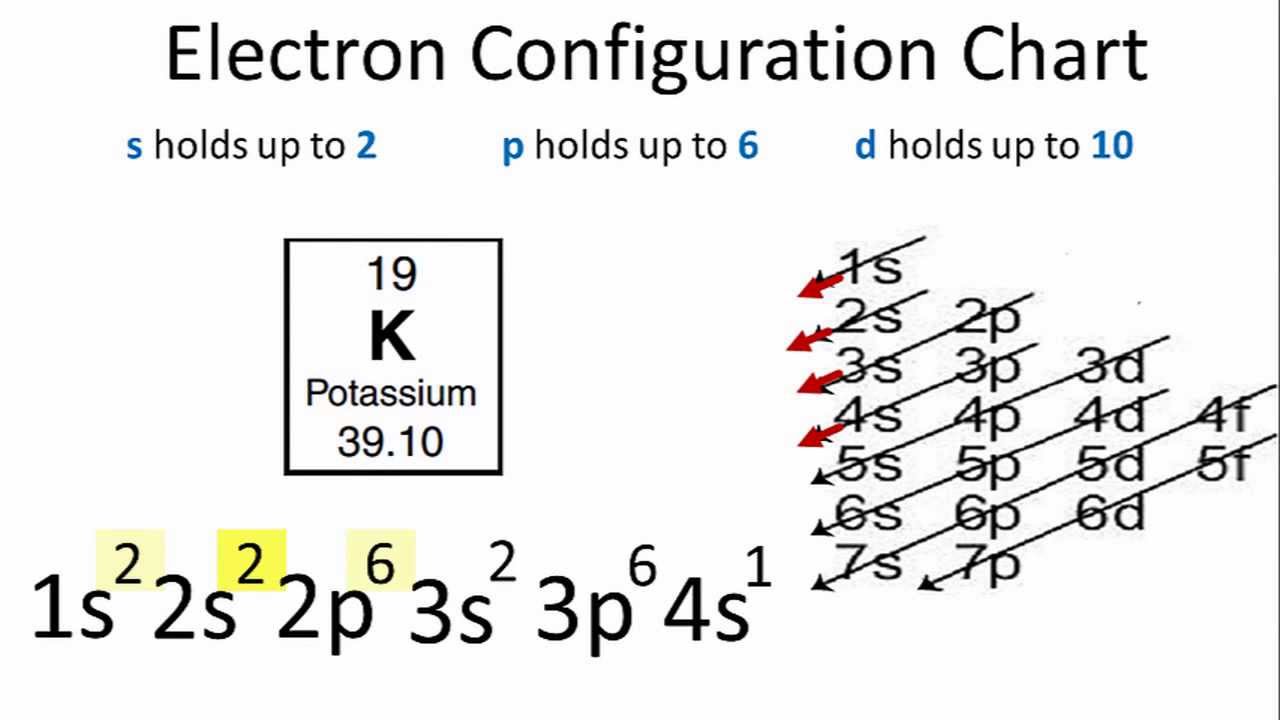
The ground state electron configuration for K is 1s22s22p63s23p64s1

What is the Electron Configuration of Potassium?
The distribution of electrons of an atom or molecule in atomic or molecular orbitals is called the electron configuration, You can find the electron configuration of K in the picture below
What is the Electron Configuration of K⁺?
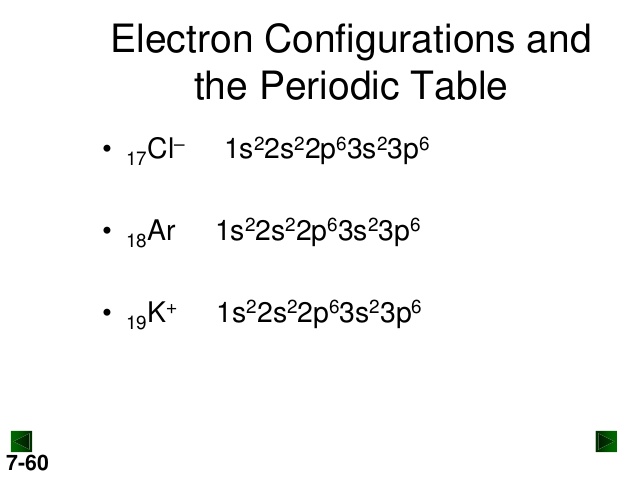
The potassium ion (K⁺) is formed when a neutral potassium atom loses its single valence electron from the 4s orbital to achieve a more stable noble gas configuration. Since neutral potassium has 19 electrons, the K⁺ ion contains 18 electrons, giving it the same electron configuration as argon (Ar).
Electron Configuration of K⁺: 1s² 2s² 2p⁶ 3s² 3p⁶
Shell Distribution: 2, 8, 8
This stable octet configuration is the reason potassium readily forms a K⁺ ion in chemical reactions.