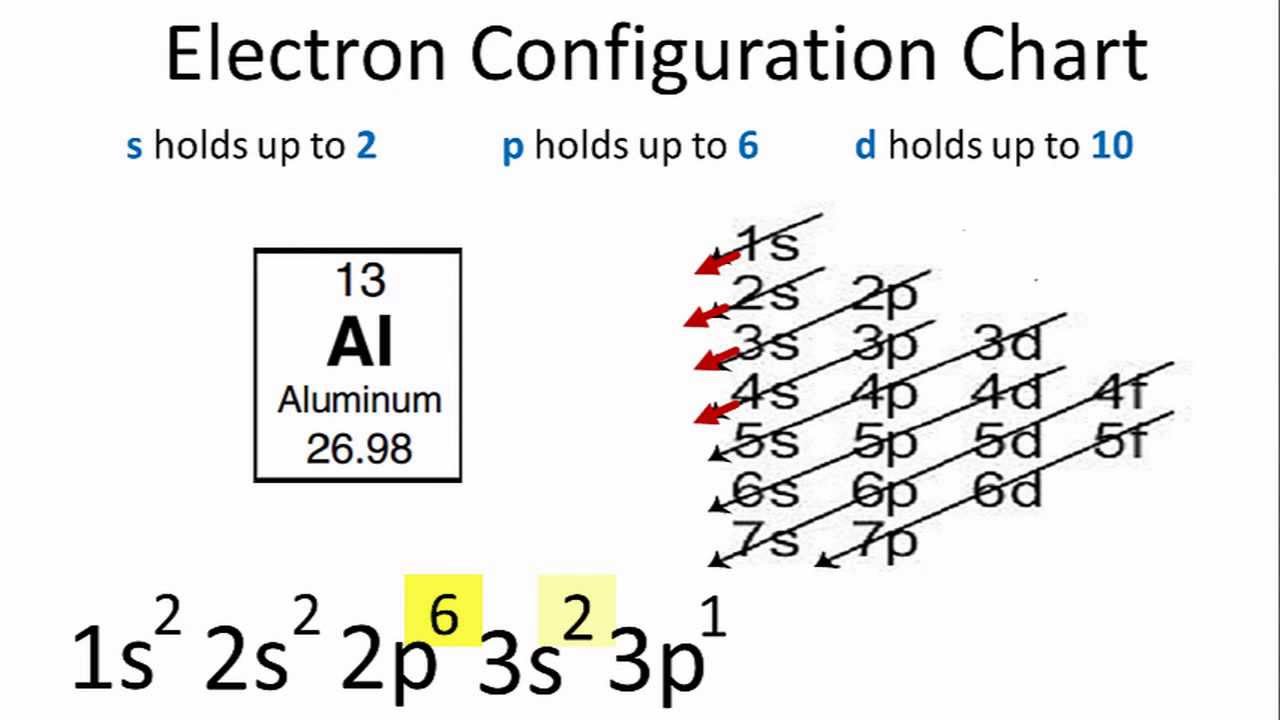
Electron Configuration For Aluminium: Aluminium (Al) is a lightweight, silver-white metal with the chemical symbol Al and atomic number 13. It belongs to the Boron Group (Group 13) of the periodic table and is known for being soft, ductile, corrosion-resistant, and highly conductive. Due to its excellent strength-to-weight ratio, aluminium is widely used in construction, transportation, electrical wiring, packaging, aerospace, and everyday household products. Its electron configuration is 1s² 2s² 2p⁶ 3s² 3p¹ (or [Ne] 3s² 3p¹), which explains its chemical behavior and ability to form strong compounds. Learn about aluminium properties, uses, atomic structure, electron configuration, and fascinating facts in this complete guide.
Aluminium Electron Configuration
1s22s22p63s21p1
- Ar Valence Electrons
- Ca Valence Electrons
- Ne Electron Configuration
- Titanium Valence Electrons
- Vanadium Valence Electrons
- Chromium Valence Electrons
- Manganese Valence Electrons
- Helium Electron Configuration
- Beryllium Electron Configuration
- Boron Electron Configuration
- Carbon Electron Configuration
- Oxygen Electron Configuration
- Aluminum Valency
- Phosphorus Valency
Electron Configuration For Aluminium ion
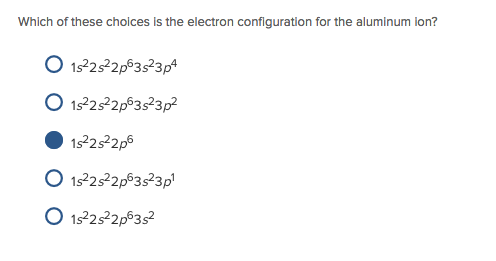
Electron configuration for Al ion is written in the form: 1s22s22p63s21p1
Aluminium Number of Valence Electrons
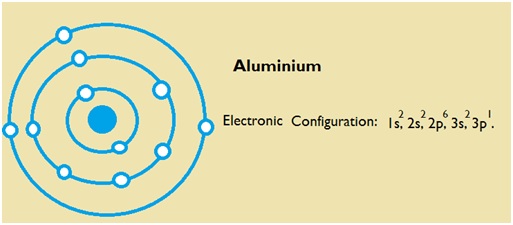
As aluminium is a part of a 3rd group and has 3 valence electrons in it.
How Do You Write The Electron Configuration For Aluminium?
The electron configuration of Aluminium (Al) is determined by arranging its 13 electrons according to the Aufbau principle, which fills the lowest-energy orbitals first before moving to higher energy levels. Since aluminium has an atomic number of 13, its electrons are distributed in a specific order across different shells and subshells.
The electron configuration of Aluminium is:
1s² 2s² 2p⁶ 3s² 3p¹
or in noble gas notation:
[Ne] 3s² 3p¹
This electron arrangement explains why aluminium belongs to Group 13 of the periodic table and typically forms a +3 oxidation state in chemical reactions. Understanding the Al electron configuration is essential for learning its chemical properties, bonding behavior, valence electrons, and real-world applications in science and engineering.
How Many Valence Electrons Are There in Aluminium?
The element aluminium lies in the “13” group also known as 3 or 3A group. It consists of three dots are put to draw the Lewis structure of aluminium.
Electron Configuration For al 3+
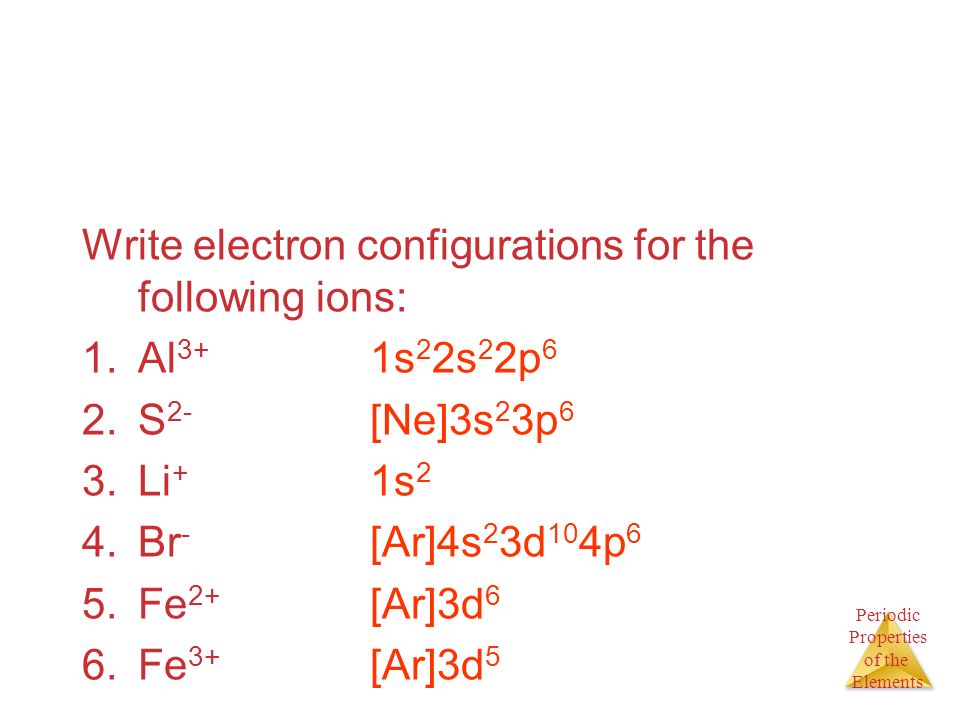
The Al³⁺ ion is formed when a neutral aluminium (Al) atom loses three electrons from its outermost energy level. Since aluminium has the electron configuration 1s² 2s² 2p⁶ 3s² 3p¹, removing the three valence electrons (two from the 3s orbital and one from the 3p orbital) results in the stable electron configuration 1s² 2s² 2p⁶, which is the same as the noble gas Neon (Ne). Understanding the electron configuration of Al³⁺ helps explain its ionic charge, chemical stability, bonding behavior, and role in chemical reactions.
Leave a Reply