Greetings! In this guide, we will explore the calcium electron configuration, including its orbital diagram, valence electrons, noble gas notation, electronic configuration, and electron distribution. Whether you’re a student preparing for chemistry exams or simply learning about the periodic table, this article explains everything in a simple and easy-to-understand manner.
- H Electron Configuration
- He Electron Configuration
- Electron Configuration for Li
- Beryllium Electron Configuration
- Boron Electron Configuration
- Electron Configuration for C
- Fluorine Electron Configuration
- Neon Electron Configuration
- Vanadium Electron Configuration
- Clorine Electron Configuration
Calcium Electron Configuration
Calcium is represented by the chemical symbol Ca and has an atomic number of 20. It belongs to the alkaline earth metals (Group 2) of the periodic table and is a highly reactive metallic element. Since calcium reacts readily with oxygen and nitrogen in the air, it develops a thin protective layer of oxide and nitride on its surface. Calcium shares many chemical and physical properties with other Group 2 elements, particularly magnesium, strontium, and barium.
Calcium Number of Valence Electrons
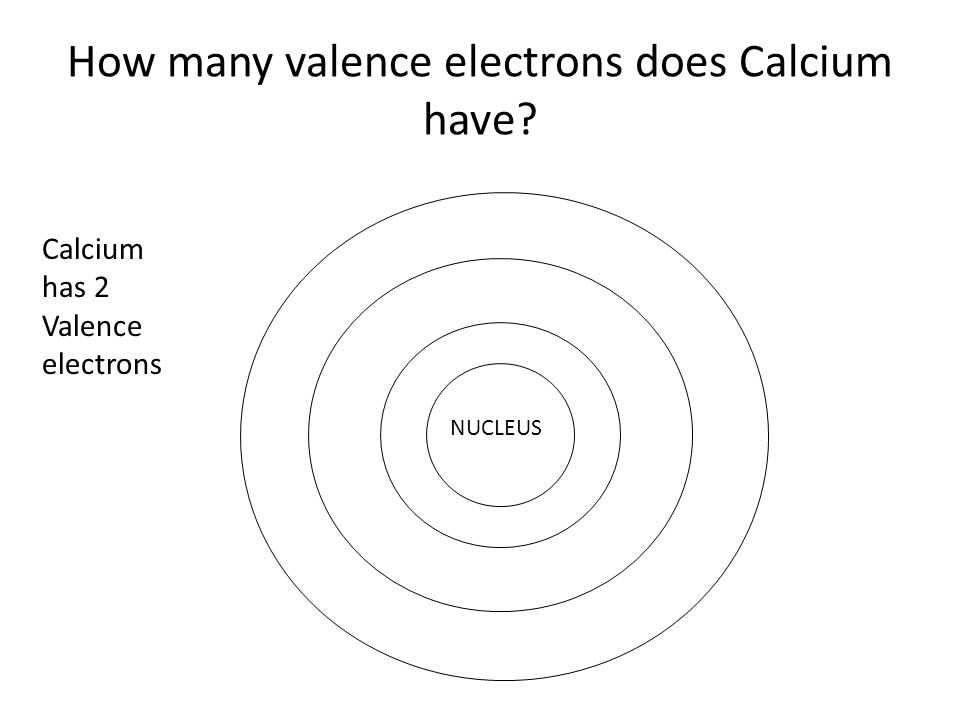
Calcium has 2 valence electrons.
These electrons are located in the 4s orbital, making them the outermost electrons. Since these electrons are relatively easy to lose, calcium commonly forms a Ca²⁺ ion during chemical reactions.
Because of its two valence electrons, calcium belongs to Group 2 (Alkaline Earth Metals) and typically exhibits a +2 oxidation state.
Calcium on the Periodic Table
Calcium is located in:
- Group 2
- Period 4
- s-block
Its position in the periodic table explains why it has two valence electrons and behaves similarly to magnesium, strontium, and barium.
Ground State Electron Configuration for Calcium
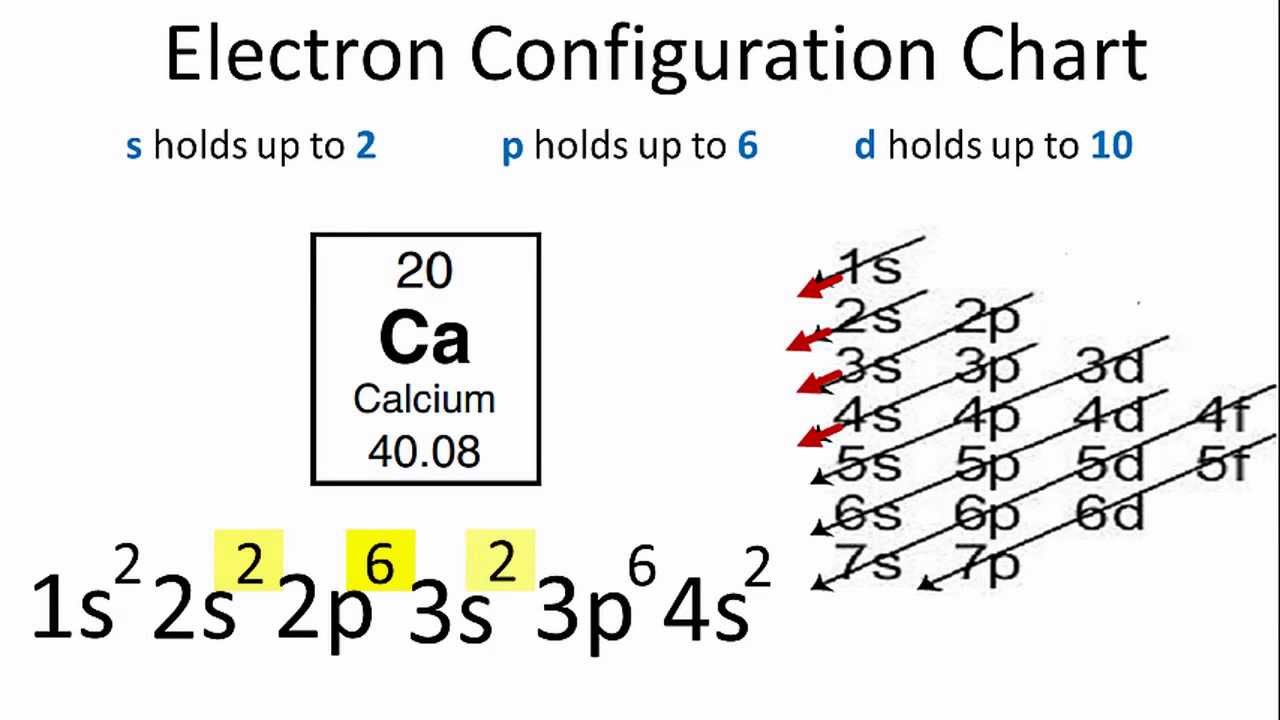
The ground-state electron configuration of calcium is:
1s² 2s² 2p⁶ 3s² 3p⁶ 4s²
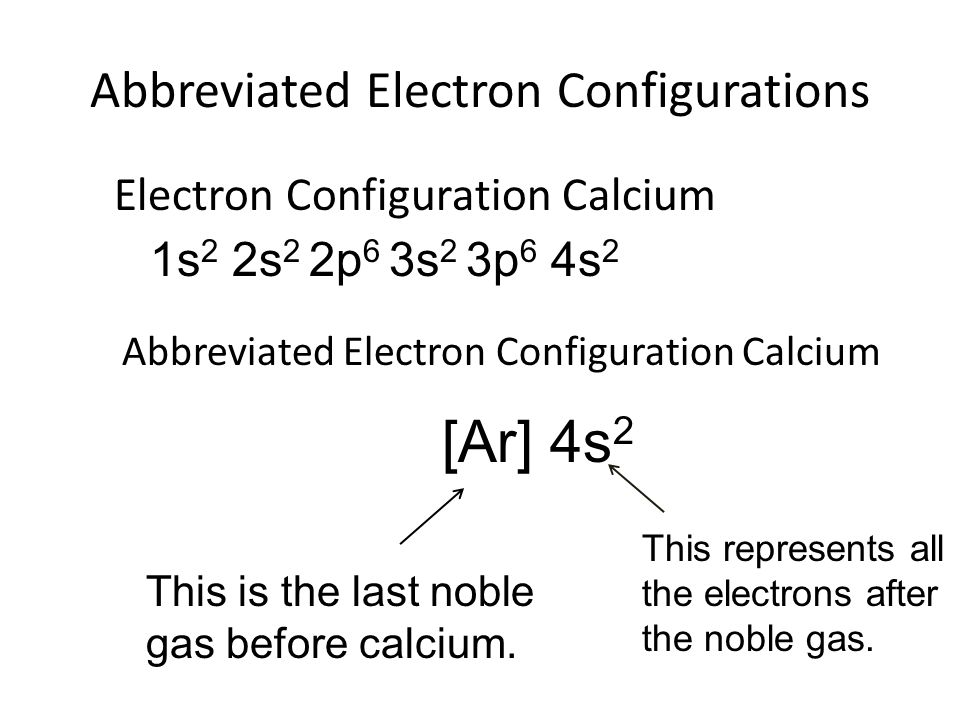
Using noble gas shorthand notation:
[Ar] 4s²
Here, [Ar] represents the electron configuration of argon, which contains the first 18 electrons, while the remaining two electrons occupy the 4s orbital.
What is the Electron Configuration of Calcium
Calcium’s atomic number is 20 which means that in a neutral calcium atom, in its nucleus there are 20 protons. The electron configuration of a Ca ion is 1s^2 2s^2 2p^6 3s^2 3p^6 4s^2.
Interesting Facts About Calcium
- Calcium is the fifth most abundant element in Earth’s crust.
- It is essential for healthy bones and teeth in humans.
- Calcium plays a vital role in muscle contraction and nerve signaling.
- Pure calcium is a soft, silvery-white metal.
- Calcium compounds are widely used in cement, plaster, steel manufacturing, and agriculture.
- Calcium reacts with water and oxygen to form calcium hydroxide and calcium oxide.
Understanding the calcium electron configuration helps explain the element’s chemical behavior, bonding properties, and position in the periodic table. Calcium has 20 electrons arranged as 1s² 2s² 2p⁶ 3s² 3p⁶ 4s², with two valence electrons in the 4s orbital. This electronic structure enables calcium to easily form a Ca²⁺ ion, making it one of the most important alkaline earth metals in chemistry, biology, and industry.