Electron Configuration For Gold: Gold (Au) is a precious transition metal with the chemical symbol Au and atomic number 79 on the periodic table. Known for its brilliant yellow color, high density, softness, ductility, and excellent malleability, gold is one of the most valuable naturally occurring elements. It is widely used in jewelry, electronics, dentistry, investment, and industrial applications because of its corrosion resistance, conductivity, and long-lasting durability. Explore the complete Gold (Au) element facts, properties, uses, atomic mass, electron configuration, and periodic table information in one place.
- Sodium Electron Configuration
- Germanium Electron Configuration
- Americium Electron Configuration
- Nobelium Electron Configuration
- Mercury Electron Configuration
Electron Configuration For Gold
-
Element Symbol: Au
-
Atomic Number: 79
-
Full Configuration:
1s² 2s² 2p⁶ 3s² 3p⁶ 3d¹⁰ 4s² 4p⁶ 4d¹⁰ 5s² 5p⁶ 5d¹⁰ 6s¹ -
Shorthand Configuration:
[Xe] 4f¹⁴ 5d¹⁰ 6s¹ -
Valence Electrons: 1 (from 6s¹)
-
Unique Property: Relativistic effects make gold appear yellowish
-
Common Oxidation States: +1, +3
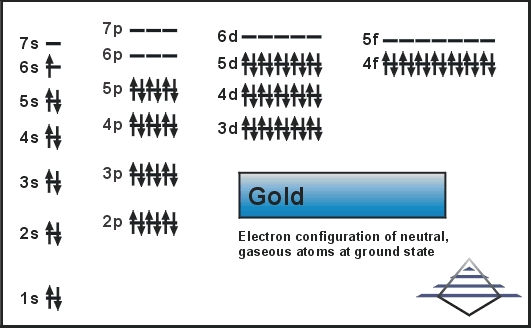
The electron configuration of an element is defined as the number of electrons present in orbits of atom or molecules.
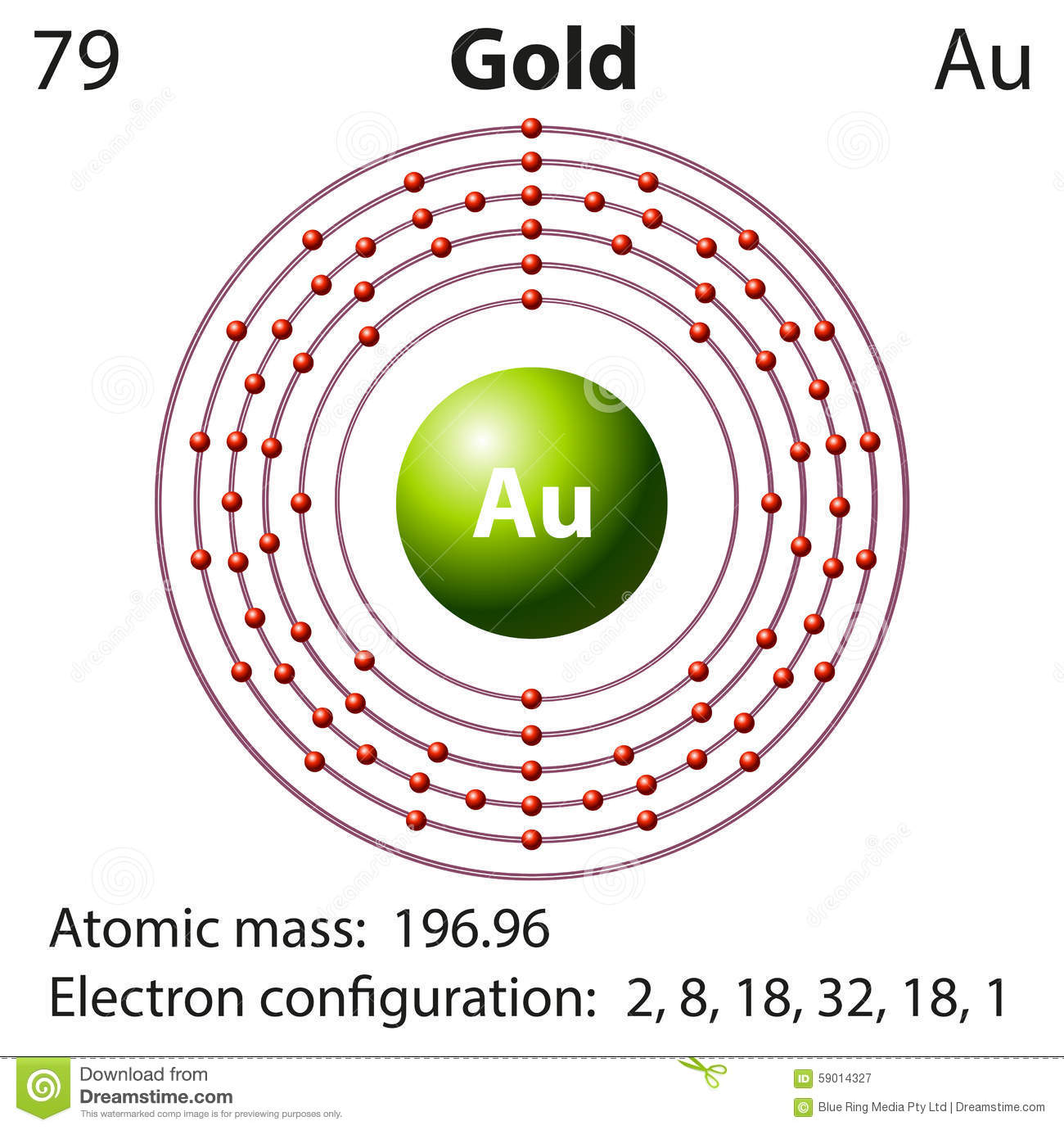
In case of gold, there are 79 electrons present in the 6 shells of the gold atom. The number of electrons in each orbit is 2, 8, 18, 32, 18, and 1. the electronic configuration of Au is:
Chemical Element with atomic number 79.
1s22s22p63s23p63d104s24p64d104f145s25p65d106s1.
Or
[Xe] 4f145d106s1
Electron Configuration For Gold Ion
The electron configuration for Gold ion can be represented as several electrons present in the orbit of Gold Atom shell and it is written as [Xe] 4f145d106s1
Full Electron Configuration For Au
The full electron configuration for Gold can be defined as:
1s22s22p63s23p63d104s24p64d104f145s25p65d106s1
Valence Electrons of Gold
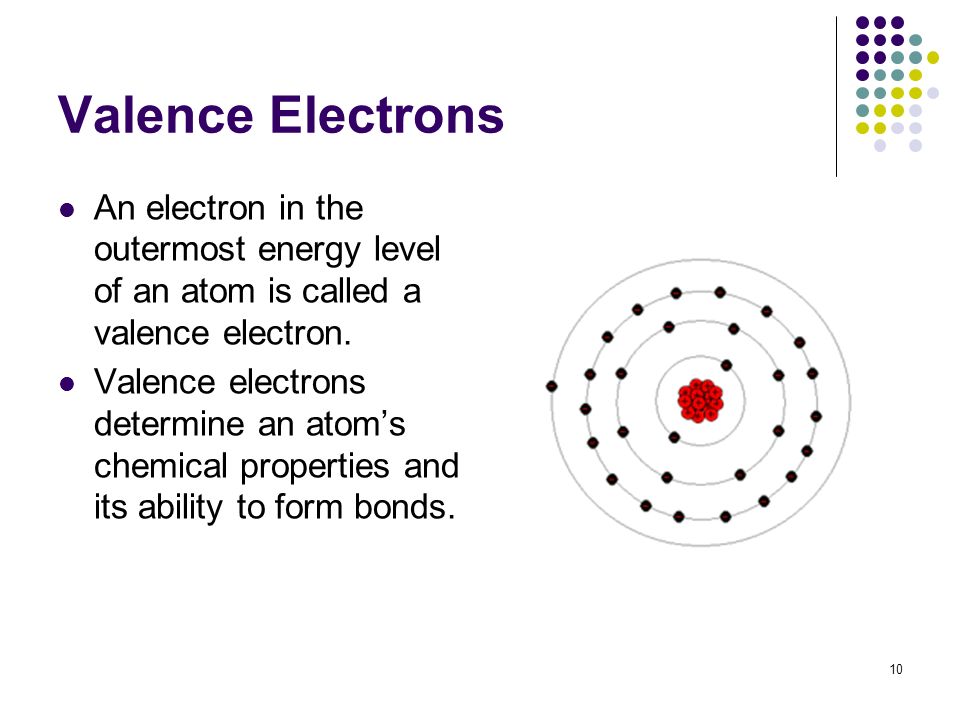
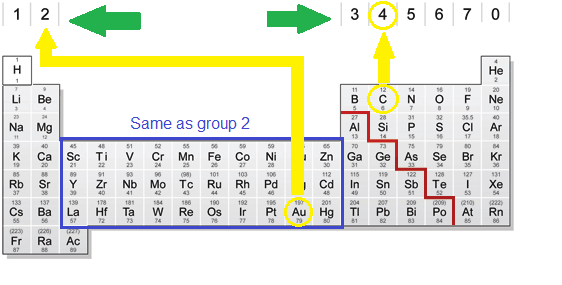
There is only one electron present in the outermost shell of Au so the number of valence electrons Gold have is ONE.
Electron configuration is the distribution of electrons of atoms in the orbits. For Au electron configuration is 1s22s22p63s23p63d104s24p64d104f145s25p65d106s1
How Many Valence Electrons are in Gold
Gold (Au) has 1 valence electron. As a chemical element with atomic number 79, gold contains 79 electrons arranged in multiple energy levels. The outermost electron configuration of gold is 6s¹, meaning there is one electron in its outermost shell. Because of this, gold commonly exhibits a +1 oxidation state and forms univalent compounds, although it can also show a +3 oxidation state in many chemical reactions. Learn more about Gold valence electrons, electron configuration, oxidation states, and periodic table properties to better understand the chemical behavior of Au.
Frequently Asked Questions
Q1. What is the electron configuration of Gold (Au)?
A: The electron configuration of Gold (Au) is [Xe] 4f¹⁴ 5d¹⁰ 6s¹. Gold has an atomic number of 79, meaning it contains 79 electrons arranged in different energy levels and orbitals. This unique electron arrangement contributes to gold’s excellent conductivity, stability, and chemical properties.
Q2. Why does Gold have a 6s¹ electron instead of 5d⁹ 6s²?
A: Gold is an exception to the expected electron filling order. One electron from the 6s orbital shifts to the 5d orbital, creating a fully filled 5d¹⁰ subshell, which is more stable. Therefore, the correct electron configuration is [Xe] 4f¹⁴ 5d¹⁰ 6s¹.
Q3. How many valence electrons does Gold (Au) have?
A: Gold has 1 valence electron in its outermost 6s orbital. This single valence electron explains why gold commonly forms +1 oxidation state compounds, although it can also exhibit a +3 oxidation state in various chemical reactions.
Q4. Why is the electron configuration of Gold important?
A: Understanding the Gold electron configuration helps explain its chemical behavior, oxidation states, electrical conductivity, corrosion resistance, and industrial applications. It is an essential topic for students studying chemistry, the periodic table, atomic structure, and electron configurations.
Conclusion
The Gold (Au) Electron Configuration is [Xe] 4f¹⁴ 5d¹⁰ 6s¹, making gold one of the most fascinating transition metals in the periodic table. Its stable electron arrangement, one valence electron, and unique chemical properties make it highly valuable for jewelry, electronics, dentistry, aerospace, and investment. Whether you’re preparing for exams or learning about the periodic table, understanding Gold’s electron configuration, orbital diagram, valence electrons, atomic number, and oxidation states provides a solid foundation in chemistry and helps explain why gold remains one of the world’s most important elements.