Sodium (Na) is a highly reactive chemical element with atomic number 11 and a mass number of 23, making it one of the most important alkali metals in the periodic table. Known for its soft, silvery-white appearance, sodium belongs to Group 1 and has a single electron in its outermost shell, which makes it extremely reactive, especially when exposed to air or water. Because of its unique chemical properties, sodium plays a vital role in chemistry, biology, and various industrial applications.
As the sixth most abundant element in the Earth’s crust, sodium is rarely found in its pure metallic form due to its high reactivity. Instead, it occurs naturally in compounds such as sodium chloride (table salt) and other highly soluble minerals. Sodium is essential for both plants and animals, helping regulate fluid balance, nerve signaling, and muscle function. In industry, sodium is widely used in chemical manufacturing, street lighting, metal refining, and as a heat transfer coolant in certain nuclear reactors because of its excellent thermal conductivity and relatively low melting point.
Sodium Mass Number and Atomic Number
The atomic number of sodium is 11, meaning every sodium atom contains 11 protons in its nucleus. A neutral sodium atom also has 11 electrons, while its most common isotope contains 12 neutrons, giving it a mass number of 23. Understanding the atomic number, mass number, electron configuration, and physical properties of sodium is essential for students, educators, and anyone studying chemistry, as these characteristics determine sodium’s behavior, reactivity, and importance in both nature and modern science.
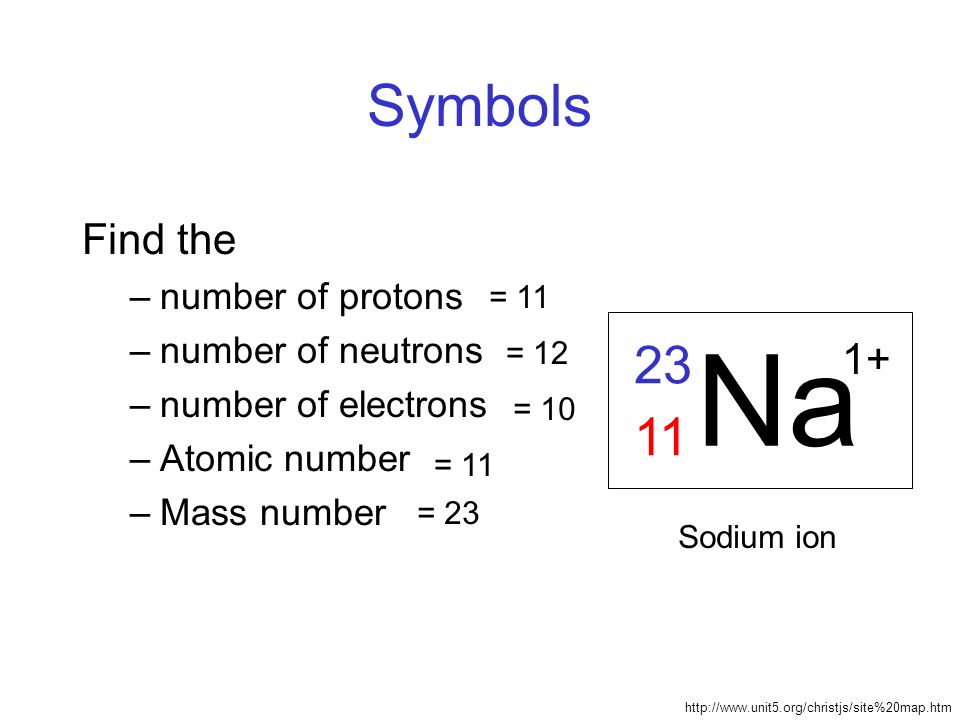
- Isotopes of Sodium: While sodium typically has an atomic number of 11, indicating 11 protons in its nucleus, it can have different mass numbers due to the presence of isotopes. Isotopes are atoms of the same element that have the same number of protons but different numbers of neutrons. Some common isotopes of sodium include sodium-23, sodium-24, and sodium-22, with mass numbers 23, 24, and 22, respectively.
- Relative Abundance: The most abundant isotope of sodium found in nature is sodium-23, which makes up about 100% of naturally occurring sodium. Sodium-24, though less abundant, is also naturally occurring but in trace amounts. Other isotopes, such as sodium-22 and sodium-25, are produced artificially or found in minute quantities as products of nuclear reactions.
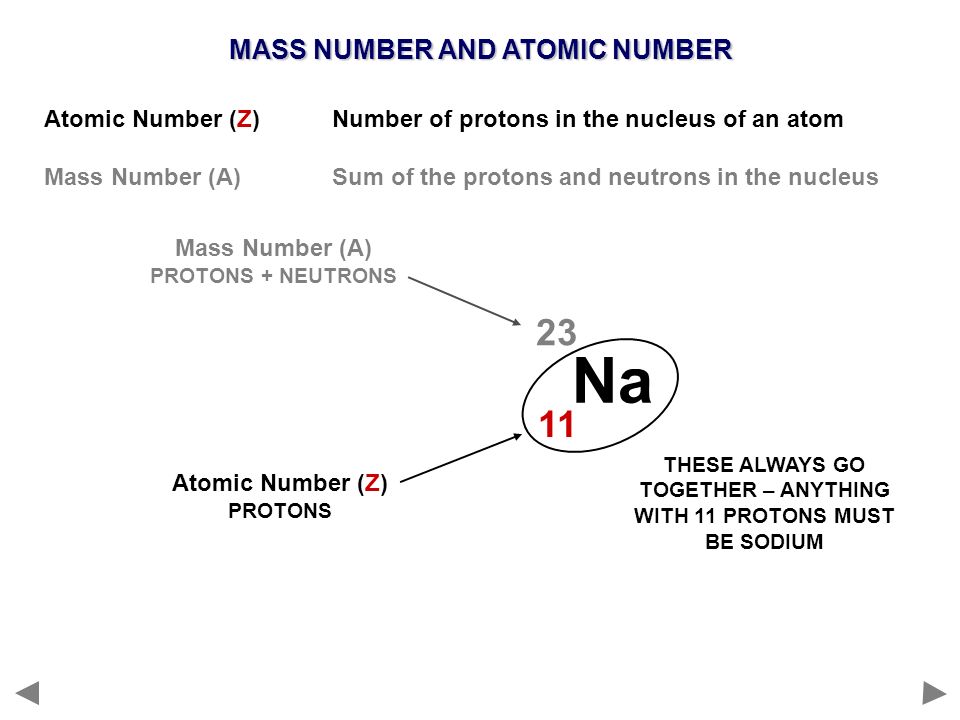
Unlike the atomic number of sodium, which is always 11, the mass number of sodium can vary because different isotopes contain different numbers of neutrons. The mass number is calculated by adding the number of protons and neutrons in the atom’s nucleus. Since every sodium atom has 11 protons, you can easily find the number of neutrons by subtracting the atomic number from the mass number. This simple calculation helps identify the specific isotope of sodium.
Sodium Number of Neutrons
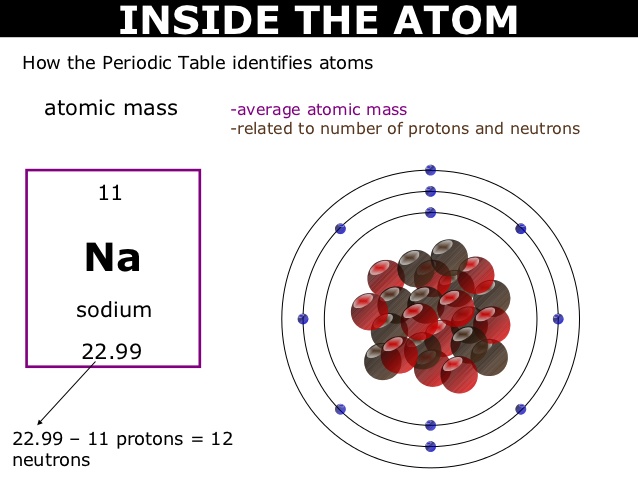
Understanding the relationship between the atomic number, mass number, protons, neutrons, and sodium isotopes is essential for learning atomic structure. For example, the most common isotope, Sodium-23 (²³Na), has 11 protons and 12 neutrons because 23 − 11 = 12. Other sodium isotopes contain different numbers of neutrons, which changes their mass number while the atomic number remains the same. Knowing how to calculate the number of neutrons in sodium is a fundamental concept in chemistry and is frequently asked in school exams and competitive tests.
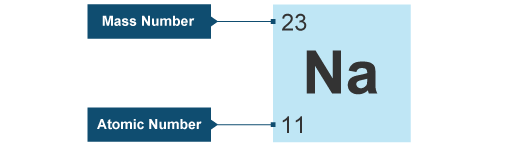
One of the most common isotopes of sodium is sodium-23. The mass number of sodium-23 is 23, and since sodium has an atomic number of 11, we can calculate the number of neutrons as follows:
Number of neutrons = Mass number – Atomic number Number of neutrons = 23 – 11 = 12
- Atomic Mass: The atomic mass of sodium is the weighted average of the masses of its naturally occurring isotopes, taking into account their relative abundances. For sodium, the atomic mass is approximately 22.99 atomic mass units (amu). The decimal fraction is due to the presence of various isotopes with slightly different masses.
- Isotopic Notation: Isotopes of sodium can be represented using isotopic notation, where the element’s symbol is followed by the sum of its atomic number (Z) as a subscript and its mass number (A) as a superscript. For example, sodium-23 is represented as ^23Na^11, where 23 is the mass number (A) and 11 is the atomic number (Z).
Therefore, sodium-23 has 12 neutrons in its nucleus. It is essential to note that other isotopes of sodium will have different numbers of neutrons.
Mass Number of a Sodium Atom
The mass number of a sodium atom is determined by adding the number of protons and neutrons present in its nucleus. As mentioned earlier, sodium has an atomic number of 11, representing the number of protons. The number of neutrons, on the other hand, can vary depending on the isotope of sodium.
Let’s consider the isotope sodium-24 as an example. Sodium-24 has an atomic number of 11, as all sodium isotopes do, and we can find its mass number by adding the number of protons and neutrons:
Mass number = Number of protons + Number of neutrons Mass number = 11 (protons) + 13 (neutrons) = 24
- Radioisotopes: Some isotopes of sodium, like sodium-24, are unstable and radioactive. These isotopes undergo radioactive decay, emitting radiation in the process. Radioisotopes of sodium find use in various applications, including medical imaging, radiotracer studies, and industrial processes.
- Neutrons and Stability: The number of neutrons in an atom’s nucleus plays a crucial role in its stability. Generally, stable isotopes have a balance of protons and neutrons in their nuclei. However, some isotopes may be unstable, leading to radioactive decay and the eventual transformation into more stable elements.
Therefore, the mass number of sodium-24 is 24. Different isotopes of sodium will have different mass numbers due to the varying number of neutrons they contain. Learn What Is Atomic Number And Mass Number? here.
What is a Possible Mass Number of a Sodium Atom
Sodium has several isotopes, each with a different number of neutrons, which results in various possible mass numbers for sodium atoms. The most abundant and stable isotope of sodium is sodium-23, which has 11 protons and 12 neutrons, giving it a mass number of 23. This isotope accounts for nearly 100% of naturally occurring sodium.
Apart from sodium-23, another possible mass number for a sodium atom is sodium-24. This isotope has 11 protons and 13 neutrons, resulting in a mass number of 24. Sodium-24 is less abundant compared to sodium-23 but is still found in trace amounts in nature.
- Formation in Stars: Sodium, like most elements heavier than helium, is primarily formed in stars through nuclear fusion. In the core of stars, hydrogen atoms fuse to form helium, releasing energy in the process. Further fusion reactions in more massive stars can produce elements like sodium, which are subsequently released into space through stellar processes like supernovae.
- Importance in Biology: Sodium is an essential element for biological organisms. It plays a critical role in maintaining proper fluid balance, nerve function, and muscle contraction. Sodium ions are crucial for the transmission of electrical signals in nerve cells and muscle cells, enabling essential bodily functions.
Other isotopes of sodium, such as sodium-22 and sodium-25, are possible as well, with different combinations of protons and neutrons leading to distinct mass numbers. These isotopes, however, are less common and often produced artificially in laboratories for research and industrial purposes.
What Is the Atomic Number of Sodium?
The atomic number of sodium is 11. In the periodic table, elements are arranged in order of increasing atomic number. Sodium is found in the third period and the first group of the periodic table. This means that all sodium atoms have 11 protons in their nuclei.
The atomic number is a fundamental property of an element, and it defines the element’s identity. Since each element has a unique number of protons in its nucleus, the atomic number serves as a characteristic identifier for that element.
- Industrial Applications of Sodium: Sodium and its compounds play a vital role in modern industries and everyday life. Sodium hydroxide (NaOH), also known as caustic soda, is widely used in the manufacture of paper, textiles, soaps, detergents, cleaning products, and industrial chemicals. Sodium carbonate (Na₂CO₃), commonly called soda ash, is an essential ingredient in glass manufacturing, water treatment, detergent production, and chemical processing. In addition, sodium compounds are used in food preservation, pharmaceuticals, agriculture, and energy storage, making sodium one of the world’s most commercially important elements.
- Environmental Impact of Sodium: Although sodium is essential for many biological and industrial processes, excessive amounts can negatively affect both human health and the environment. Consuming too much sodium, primarily through table salt and processed foods, has been linked to high blood pressure, heart disease, stroke, and kidney problems. In the environment, elevated sodium levels in soil can reduce soil fertility and hinder plant growth, while excess sodium in rivers, lakes, and groundwater can disrupt aquatic ecosystems and affect water quality. Proper sodium management and responsible use are important for protecting public health, supporting sustainable agriculture, and preserving natural ecosystems.
Sodium is an alkali metal with chemical symbol Na, and it is highly reactive due to its single valence electron in the outermost electron shell. It is an essential element for various biological processes and is commonly found in salts, such as sodium chloride (table salt), as well as in many minerals and rocks. Its atomic number, 11, remains constant for all stable isotopes of sodium.