Chlorine Valence Electrons: If you’re wondering how many valence electrons chlorine has, you’re in the right place. Chlorine is one of the most important elements in chemistry, and knowing its valence electrons is essential for understanding chemical bonding, electron configuration, the periodic table, and compound formation. Whether you’re a school student, preparing for competitive exams, or simply brushing up on chemistry basics, this guide explains how many valence electrons are in chlorine, its valency, and why it plays such a crucial role in chemical reactions with easy-to-understand examples.
- Flerovium Valence Electrons
- Moscovium Valence Electrons
- Livermorium Valence Electrons
- Tennessine Valence Electrons
- Oganesson Valence Electrons
- Neptunium Valence Electrons
- Plutonium Valence Electrons
- Americium Valence Electrons
- Antimony Valence Electrons
- Tellurium Valence Electrons
- Iodine Valence Electrons
- Xenon Valence Electrons
- Caesium Valence Electrons
Chlorine Valence Electrons Dot Diagram
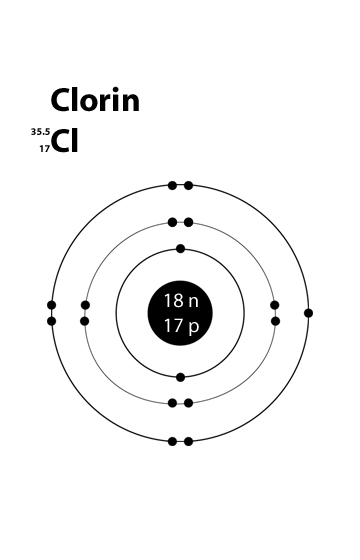
The atomic number of chlorine is 17. Hence it has 2 electrons in its innermost shell, 8 electrons in its second shell and 7 electrons electron in the outer-most shell respectively.
- Titanium Valence Electrons
- Vanadium Valence Electrons
- Chromium Valence Electrons
- Manganese Valence Electrons
- iron Valence Electrons
- Cobalt Valence Electrons
- Nickel Valence Electrons
- Copper Valence Electrons
- Zinc Valence Electrons
- Gallium Valence Electrons
- Germanium Valence Electrons
- Arsenic Valence Electrons
- selenium Valence Electrons
How many valence electrons does chlorine have?
Since it has 7 electrons in its outer-most shell, it needs one more electron to achieve stability or the octet state. Since it needs to add another electron by combining with the atom of another element, it has got a valency of -1. Check out the periodic table on the homepage. Chlorine is a very popular gas.
The number of valence electrons of Cl have been shown in this given picture.
Valence Electron of Chlorine
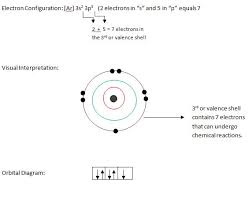
The atomic number of chlorine is 17. Hence it has got 7 electrons in its outermost shell. Its valency can be found out by subtracting 7 from 8, i.e., -1.
Frequently Asked Questions
Q1. How many valence electrons does chlorine have?
A: Chlorine has 7 valence electrons in its outermost shell. Since chlorine belongs to Group 17 (Halogens) of the periodic table, it naturally has seven outer electrons that participate in chemical bonding.
Q2. Why does chlorine need one more electron?
A: Chlorine needs one additional electron to complete its octet (8 electrons in the outer shell). This is why it readily gains an electron during chemical reactions and forms a chloride ion (Cl⁻) with a stable electron configuration.
Q3. What is the valency of chlorine?
A: The valency of chlorine is 1 because it usually gains one electron to achieve a stable outer shell. However, in some compounds, chlorine can show multiple oxidation states such as +1, +3, +5, and +7.
Q4. How do you find the valence electrons of chlorine?
A: You can determine chlorine’s valence electrons from its electron configuration: 1s² 2s² 2p⁶ 3s² 3p⁵. The outermost shell (third energy level) contains 7 electrons, which are its valence electrons.
Conclusion
Understanding how many valence electrons chlorine has is one of the most important chemistry fundamentals. Chlorine contains 7 valence electrons, making it highly reactive and eager to gain one more electron for a stable octet. This simple concept helps explain chlorine’s valency, chemical bonding, Lewis dot structure, electron configuration, and compound formation. Whether you’re preparing for school exams, NEET, JEE, or simply learning chemistry, mastering chlorine’s valence electrons will make many other chemistry topics much easier to understand.
Leave a Reply