Sulphur (S) is an important non-metallic chemical element that plays a vital role in chemistry. It is widely found in the Earth’s crust and is used in the production of fertilizers, sulfuric acid, medicines, rubber, and many industrial chemicals. Understanding the valency of sulphur is essential for learning how it forms chemical compounds and participates in chemical reactions.
In this guide, you’ll learn what the valency of sulphur is, how many valence electrons sulphur has, why its valency changes, and the valency of sulphur in compounds like SO₂ and SO₃.
What is the Valency of Sulphur Why
The valency of sulphur is commonly 2, but it can also exhibit valencies of 4 and 6 depending on the compound it forms. This variable valency occurs because sulphur belongs to Group 16 (the Oxygen family) of the periodic table and has six electrons in its outermost shell.
Sulphur can either gain, lose, or share electrons to achieve a stable electronic configuration. As a result, it forms compounds with different oxidation states and bonding arrangements.
Common Valencies of Sulphur
- Valency 2: Found in compounds such as H₂S (Hydrogen Sulphide)
- Valency 4: Found in SO₂ (Sulphur Dioxide)
- Valency 6: Found in SO₃ (Sulphur Trioxide) and H₂SO₄ (Sulphuric Acid)
Although sulphur shows multiple valencies, 2 is considered its most common valency in basic chemistry.
Why Does Sulphur Have Variable Valency?
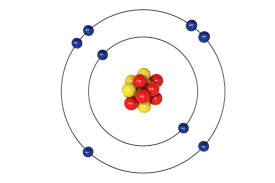
Sulphur has an atomic number of 16 with the electronic configuration:
2, 8, 6
This means sulphur has six valence electrons in its outermost shell. To complete its octet, it generally needs two more electrons, giving it a valency of 2. However, because sulphur belongs to the third period of the periodic table, it can expand its outer electron shell and exhibit valencies of 4 and 6 in certain compounds.
This ability is known as variable valency, which allows sulphur to form a wide variety of stable compounds.
How Many Valence Electrons Does Sulphur Have
Sulphur contains 6 valence electrons.
Its electronic configuration is:
1st Shell: 2 electrons
2nd Shell: 8 electrons
3rd Shell: 6 electrons

Since the outermost shell contains 6 electrons, sulphur requires 2 more electrons to complete its octet. This is why it commonly shows a valency of 2, although it can also form compounds with valencies of 4 and 6.
What Is The Valency Of Sulphur In SO2
In Sulphur Dioxide (SO₂), sulphur exhibits a valency of 4 and an oxidation state of +4.

Each oxygen atom has a valency of 2, so two oxygen atoms together contribute a total valency of 4. Sulphur forms double covalent bonds with both oxygen atoms, resulting in a stable molecular structure.
Therefore:
- Compound: SO₂
- Valency of Sulphur: 4
- Oxidation State of Sulphur: +4
Frequently Asked Questions
Q: What is the valency of sulphur?
A: The most common valency of sulphur is 2, but it can also show valencies of 4 and 6 depending on the chemical compound.
Q: How many valence electrons does sulphur have?
A: Sulphur has 6 valence electrons in its outermost shell.
Q: Why does sulphur have variable valency?
A: Sulphur has six outer-shell electrons and can expand its valence shell in many compounds, allowing it to exhibit valencies of 2, 4, and 6.
Q: What is the valency of sulphur in SO₂?
A: The valency of sulphur in SO₂ is 4.
Q: What is the valency of sulphur in SO₃?
A: The valency of sulphur in SO₃ is 6.
The valency of sulphur is an important concept in chemistry because sulphur can exhibit multiple valencies—2, 4, and 6. Its six valence electrons enable it to form a wide range of chemical compounds, including hydrogen sulphide (H₂S), sulphur dioxide (SO₂), sulphur trioxide (SO₃), and sulphuric acid (H₂SO₄). Understanding sulphur’s valency helps explain its chemical behavior, bonding, and reactions in both laboratory and industrial applications.