Phosphorus is one of the most important non-metallic elements in chemistry. Whether you’re preparing for school exams, competitive exams like JEE or NEET, or simply learning the periodic table, understanding phosphorus valence electrons and phosphorus valency is essential.
In this complete guide, you’ll learn the number of valence electrons in phosphorus, why it exhibits multiple valencies, its electronic configuration, Lewis dot structure, and common compounds.
- Flerovium Valence Electrons
- Moscovium Valence Electrons
- Livermorium Valence Electrons
- Tennessine Valence Electrons
- Oganesson Valence Electrons
- Neptunium Valence Electrons
- Plutonium Valence Electrons
- Americium Valence Electrons
- Antimony Valence Electrons
- Tellurium Valence Electrons
- Iodine Valence Electrons
- Xenon Valence Electrons
- Caesium Valence Electrons
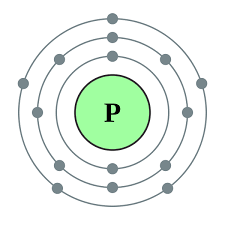
Since phosphorus has 5 electrons in its outermost shell, it has the valency of 5.
Why is the Valency of Phosphorus 3 and 5
Phosphorus is a Group 15 element with 5 valence electrons and the electronic configuration 1s² 2s² 2p⁶ 3s² 3p³. Because of its outer-shell electron arrangement, phosphorus commonly exhibits two valencies: 3 and 5.
|
Property |
Valency 3 | Valency 5 |
|
Number of Bonds Formed |
3 |
5 |
|
Common Compounds |
PCl₃, PH₃, PBr₃ |
PCl₅, H₃PO₄, P₄O₁₀ |
|
Electron Arrangement |
Three unpaired electrons form bonds |
Hypervalent bonding allows five bonds |
| Common Oxidation State | 3 |
5 |
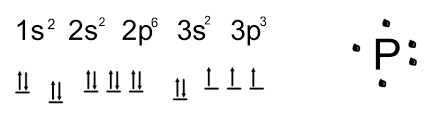
Phosphorous shows valencies of both 3 and 5. It depends upon the electronic configuration of the atom. In case there are 3 unpaired electrons in its three p orbitals, it has a valency of 3. For example, in case of PCl3.
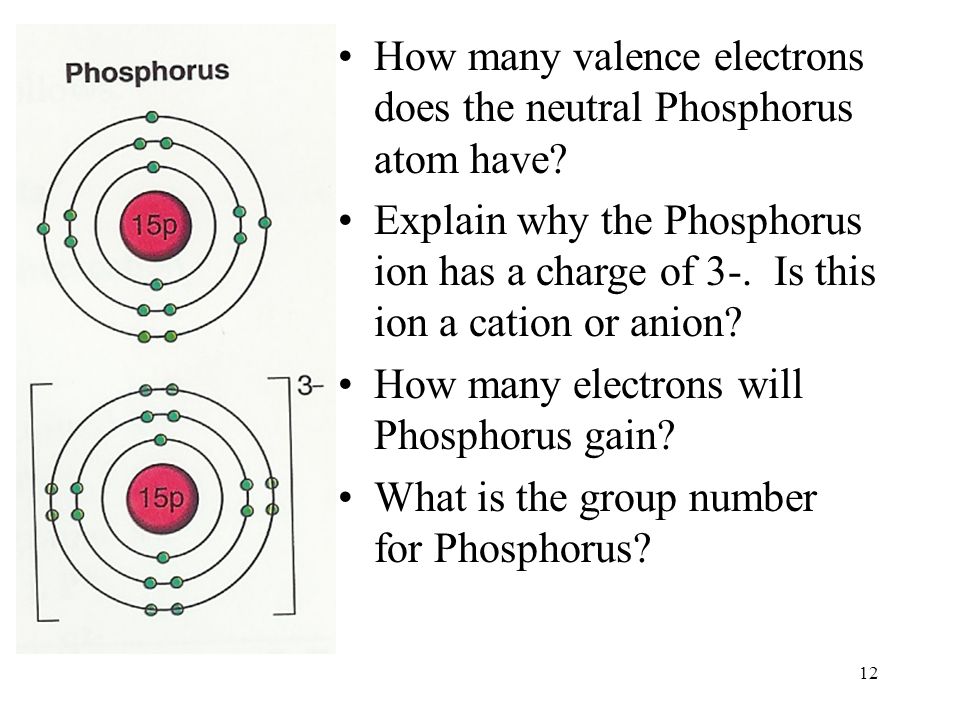
When Phosphorus has a valency of 5, like in PCl5 , one of 3s electron gets promoted to 3d orbital.
Phosphorus Valence Electrons Dot Diagram
The Lewis dot diagram of phosphorus is one of the easiest ways to visualize its 5 valence electrons. Since phosphorus has an atomic number of 15, a neutral phosphorus atom contains 15 electrons with the electronic configuration:
1s² 2s² 2p⁶ 3s² 3p³
The first shell (K) holds 2 electrons, the second shell (L) contains 8 electrons, and the third (outermost) shell has 5 electrons. These five outer-shell electrons are known as valence electrons because they participate in chemical bonding.
The 5 valence electrons are distributed as follows:
- 3s subshell: 2 electrons (one lone pair)
- 3p subshell: 3 electrons (three unpaired electrons)
These three unpaired electrons allow phosphorus to form three covalent bonds, while under certain conditions it can expand its bonding capacity to form five bonds, such as in PCl₅.
- Total valence electrons: 5
- One lone pair: 2 electrons
- Three single (unpaired) electrons: 3 electrons
The Lewis dot structure helps explain why phosphorus commonly exhibits valencies of 3 and 5, making it an important element in compounds like phosphorus trichloride (PCl₃), phosphorus pentachloride (PCl₅), and phosphoric acid (H₃PO₄).
How many valence electrons does Phosphorous have?
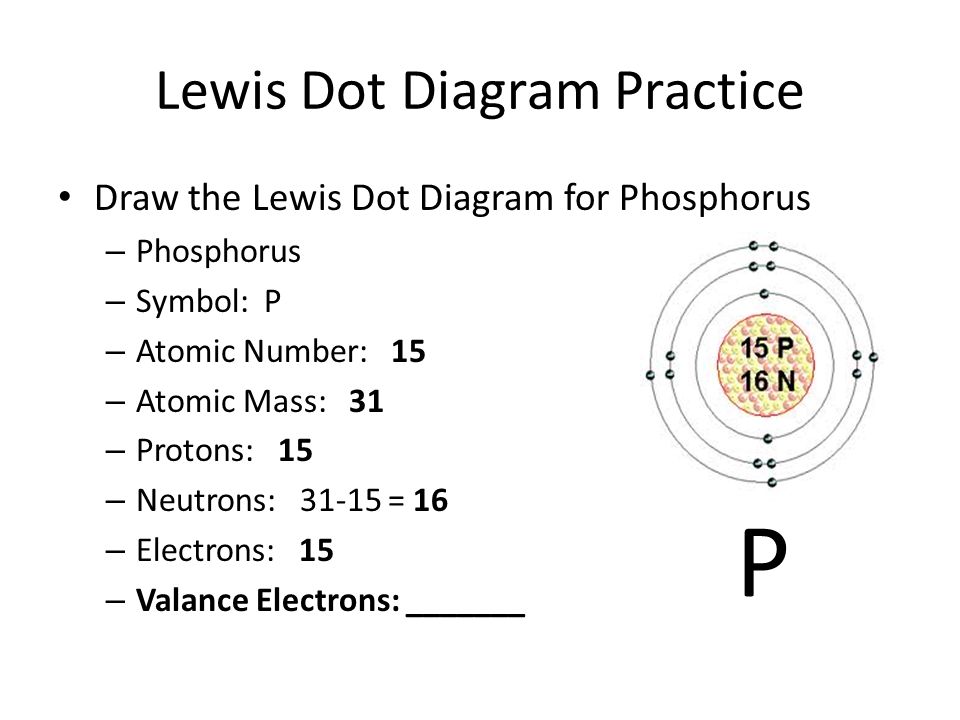
Thus, valence electronic configuration of neutral phosphorus atoms is 1s22s22p63s23p3.
What Is The Valence Electron Configuration For Phosphorus
The valence electronic configuration for phosphorus is 1s2 2s2 2p6 3s2 3p3