Platinum (Pt) is a rare and highly valuable chemical element with an atomic number of 78. It is a silver-white transition metal renowned for its exceptional durability, high density, excellent malleability, ductility, and outstanding resistance to corrosion. Because platinum remains stable even under extreme temperatures and harsh chemical conditions, it is widely used in fine jewelry, catalytic converters, fuel cells, medical devices, electronics, and industrial applications. Its unique physical and chemical properties make it one of the most sought-after precious metals in the world.
The name Platinum comes from the Spanish word “Platina” (or Platino), meaning “little silver.” It belongs to Group 10 and Period 6 of the periodic table and has six naturally occurring isotopes. Platinum is among the rarest elements in Earth’s crust, with most of the global supply mined in South Africa. Thanks to its remarkable chemical stability and resistance to oxidation and tarnishing, platinum is classified as a noble metal and plays a vital role in modern technology, clean energy solutions, and luxury jewelry.
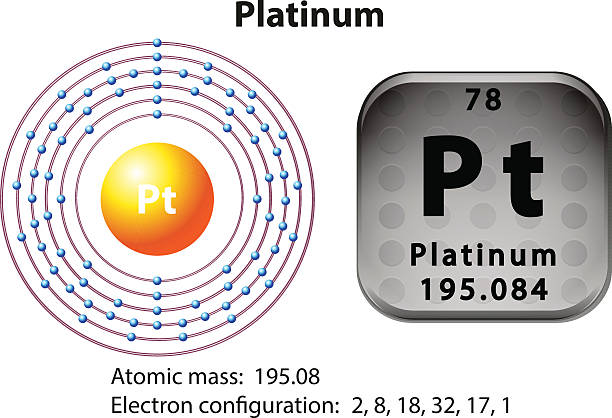
Platinum (Pt) is primarily found in copper and nickel ores, with the largest deposits located in South Africa, which produces nearly 80% of the world’s platinum supply. It is one of the least reactive transition metals, offering exceptional resistance to corrosion, oxidation, and high temperatures. Because of its outstanding durability and chemical stability, platinum is classified as a noble metal and is often discovered in its natural, uncombined (native) form.
In addition to underground ore deposits, platinum can also be found in the alluvial sands of rivers and streams. Its unique atomic structure and electron arrangement make it one of the most valuable elements in industries such as jewelry, automotive catalytic converters, electronics, and chemical manufacturing. In this guide, you’ll learn the Platinum electron configuration (Pt), valence electrons, orbital notation, electron shell configuration, and other essential atomic properties in a simple and easy-to-understand format.
What is the Electron Configuration of Platinum
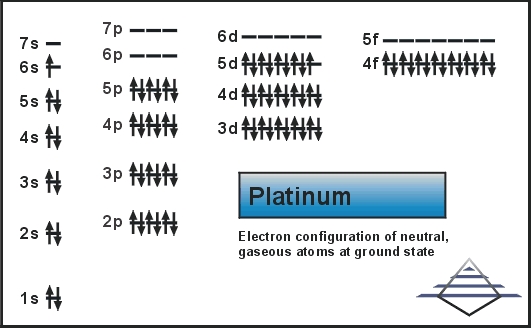
How Many Valence Electrons does Platinum have
Platinum has 10 valence electrons.
For transition metals, valence electrons include electrons present in both the outermost s orbital and the partially filled d orbital.
For platinum:
- 6s¹ = 1 electron
- 5d⁹ = 9 electrons
Total valence electrons = 10
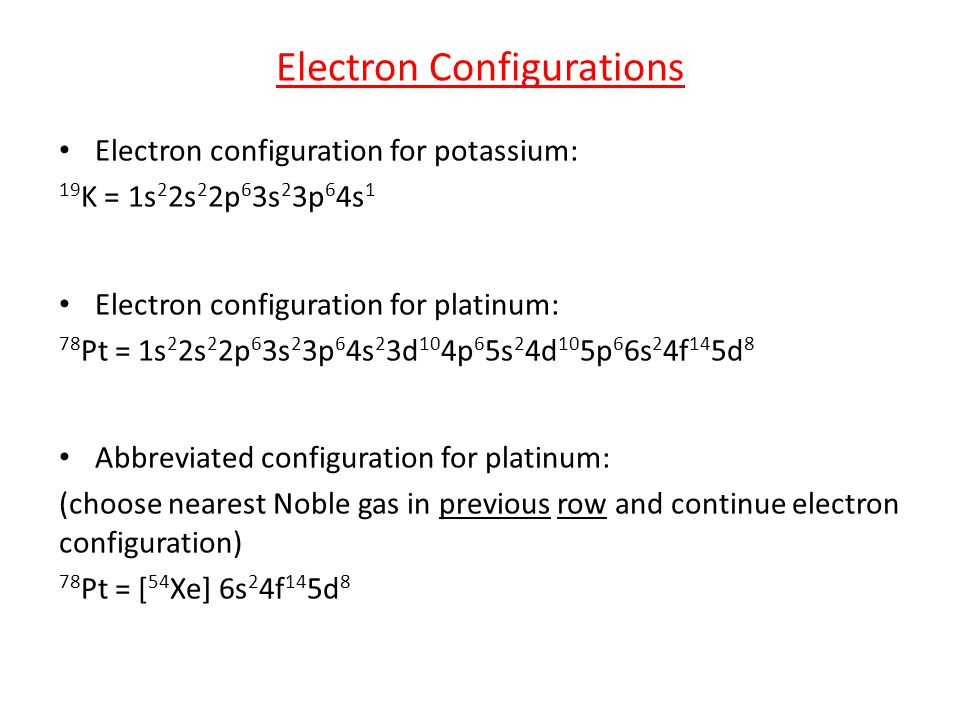
These valence electrons enable platinum to exhibit multiple oxidation states such as +2, +4, and +6, making it valuable in industrial and catalytic applications.
Platinum Atomic Information
|
Property |
Value |
|
Element Name |
Platinum |
|
Symbol |
Pt |
|
Atomic Number |
78 |
|
Atomic Mass |
195.084 u |
|
Group |
10 |
|
Period |
6 |
|
Block |
d-block |
|
Category |
Transition Metal |
| Electron Configuration |
[Xe] 4f¹⁴ 5d⁹ 6s¹ |
|
Valence Electron Configuration |
5d⁹ 6s¹ |
|
Valence Electrons |
10 |
|
Common Oxidation States |
+2, +4, +6 |
|
Electronegativity |
2.28 (Pauling Scale) |
Platinum Number of Valence Electrons
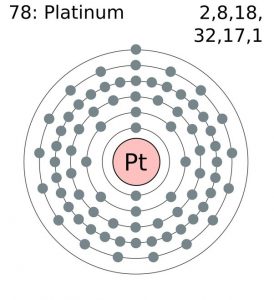
There are six valence electrons in the outer shell of the platinum.
Interesting Facts About Platinum
- Platinum is among the rarest naturally occurring elements in Earth’s crust.
- Around 70–80% of the world’s platinum supply comes from South Africa.
- It is highly resistant to corrosion, oxidation, and tarnishing.
- Platinum is widely used in automotive catalytic converters, helping reduce harmful emissions.
- Due to its purity and durability, platinum is a preferred metal for fine jewelry.
- Platinum is also essential in medical devices, fuel cells, chemical laboratories, and electronics.
- It occurs naturally in nickel and copper ores as well as in alluvial deposits.